
 I am excited about my new focus on helping universities, colleges, and private schools provide continuing, multi-dimensional value to their alumni through social media—and specifically, custom online communities.
The opportunities for engagement and exchange are rich and powerful in a higher education environment. Leveraging the strength of the profound personal connection through the “ambient intimacy” of online interaction can ultimately help increase giving, boost admissions referrals, and engage more alumni in meaningful ways. For alumni associations, the applications are very compelling:
• Increase investment in affinity products and institution-related activities.
• Enrich and deepen the institution’s “brand” experience for students, faculty, staff, alumni, and friends.
• Promote and strengthen the foundations of affiliation (class year, school/college, dorm/Greek organization, student activity, professional focus)
• Position the institution’s community to positively impact loyalty-related outcomes, such as annual giving, association membership, reunion attendance, and etc.
The challenge is maximizing the ongoing value of an online community by balancing institution content control with user participation. Remember, it’s about relationships—building on the ephemeral—memories, experiences, and bonds based less on practical deliverables and more the emotions of affiliation.
In his August 2009 Wall Street Journal article on corporate branded communities, The Fans Know Best, Dr.Uptal Dholakia of Rice University contends:
“Allowing discussion and activities like networking and socializing leads visitors to participate in the site for emotional and social reasons. It keeps them coming back, and thus strengthens the bond between them and the company (and each other). Part of giving up control is also giving visitors the freedom to complain and criticize the brand, or to wax lyrical about a competitor, to their heart’s content.”
Therefore, our task becomes more focused on orchestrating, monitoring, and responding–rather than drafting, editing, and deleting.
Though Dr. Dholakia is speaking of the corporate sector here, I think the ideas can be applied to association communities, as well. Visitors frequent communities, because they enjoy the experience—not because it is something on the to-do list. Think about the silly quizzes on Facebook. The “fun factor” should not be underestimated as a key driver of engagement. Yet, it’s possible for universities and colleges to deliver real value in the process. We must not forget the truly “social” component of social media—providing a platform for witty banter. And universities alumni already have a built-in affinity. The potential is boundless—to create what I call the “perpetual reunion.” It’s 365/24/7 engagement.
Dr.Uptal Dholakia offers a high-octane example of community-building savvy from the corporate world:

“When Lego Group set out to develop Mindstorms NXT, the latest version of its game for building programmable robots, it enlisted help from a group of adult enthusiasts whom it found on Lugnet.com, the largest unofficial community of Lego fans. While the marketing target for Mindstorms is mainly teenage boys, the people that Lego reached out to were men in their 40s and 50s who knew each other from communicating and working together on elaborate Lego projects on Lugnet.com.
The group’s members, according to a Lego spokesman, contributed ‘incredibly valuable insights’ in hardware, software, design and usability based on their own experiences. The company credits the group with helping to make Mindstorms NXT appeal both to adults and ‘a new, younger generation of robotics enthusiasts.’”
Just think of the application for a university community—building connection between alumni, faculty, and staff—students and even prospective students. Not all colleges and universities are systematically monitoring their “unofficial” user-driven groups on LinkedIn, Fan Pages on Facebook, and Twitter feeds. But tracking and engaging these communities can provide a wealth of opportunities, alliances, ideas, innovations, and energy.
What are your thoughts? To learn more about unleashing the power of the web, contact me: elgantz @ yahoo.com.

 The pursuit of social media ROI (return on investment) continues to vex me. Last week, my blog post featured some comments about its confounding elusiveness and sparked lively discussion—on and offline. It’s still a very hot topic—at conferences, webinars, cocktail parties, bunko nights, and marketing strategy meetings going on as I type.
  Still, even in the ROE context, just having a blog, Facebook account, or Twitter profile does not a social media strategy make. The fabric of social media success is woven from many threads and yarns, including compelling content, irresistible contests/quizzes, provocative video/photos, and authentic voices. You wouldn’t use just one traditional channel to market your product or organization, so it is probably not useful to think that one Twitter account or a blog post by itself can somehow produce ROI—or even ROE—overnight. Attributing a direct revenue equation to an isolated social media marketing activity simply isn’t relevant or accurate. Though weak individually, coordinated social media activities can certainly move the needle.


 Another thought-leader in this area is Dan Pallotta, author of


 I am the first to admit it. I am an anomaly—a distinctive amalgam of eclectic experiences and pronounced passions. I am a seasoned, accomplished professional, schooled in the most traditional marketing media techniques; but I have also journeyed to the cutting edge of the vast social media abyss. It’s largely uncharted territory for my brethren “of a certain age,” so carving out my professional niche while straddling disparate worlds, approaches, and generations can be a challenge.
  The recent


 I recently read Josh Catone’s Mashable post on the
 Think back to the days of the old general store. We knew our merchants in the neighborhood personally—around the corner and down the road. We knew exactly what they sold and where they stood. They were members of the community, and they earned trust through referral and association. Enter the industrial age—efficiency trumped personalization. People didn’t mind where they shopped—as long as goods were cheap and abundant. Soon, the suburbs emerged, and the impersonal, monolithic box stores were born. In many ways, we are now coming full circle. Perceived value of anonymous, depersonalized transactions is waning.
 As the cacophony of social media voices continues to intensify around nonprofit causes, the world of arts and culture is really just beginning to embrace the potency of online engagement tools—in provocative, new ways. For many organizations, the experience is exceeding online engagement and becoming what I call “meta operational” – creating the illusion of participation in the core functional tasks organizations. This creates a dynamic, new way to thinking about participation and volunteerism—especially for those more casual observers or inquirers. As we say in the performing arts, we are finding new ways to break down the fourth wall.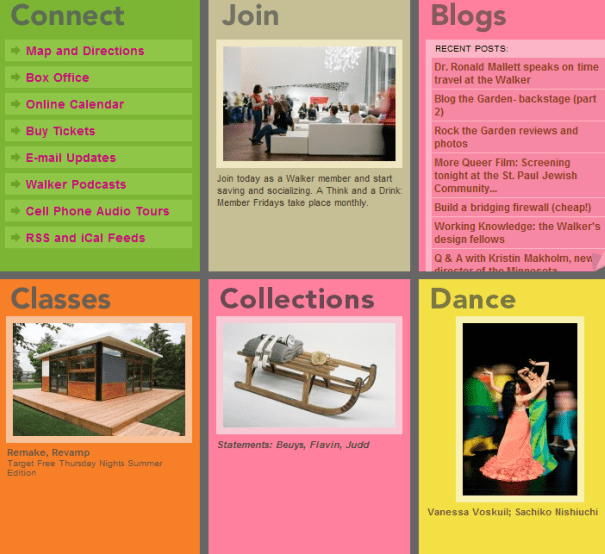

 Elaine Gantz Wright