The Only Thing I Had Time to Write

The holidays are tough; they just are, this year in particular. Even in years without global pandemics and the strife of 2020, they serve up a bittersweet concoction of complicated family dynamics, mixed with tidbits of joy, the overwhelming presence of loss—and deeply cherished memories of celebrations past. This is my third Christmas without my son Elliot.

For me, the holidays are something to endure, to get through. But for my dear son Ian’s sake, my priority is to create new traditions for us, fresh memories for him, for me and for us. Easier said than done this year, but being together will be my greatest gift.   

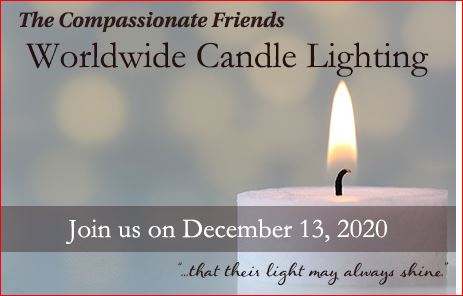
There are plenty of new experiences now. Last weekend, I participated in a deeply moving ritual – the 24th Annual Worldwide Candle Lighting, sponsored by Compassionate Friends, virtual this year. The event honors and remembers children gone too soon. My dear friends Patty and Ken, along with First Unitarian Church, hosted a beautiful Zoom ceremony with profound and intimate meaning for those who struggle every day to pick up the sharp fragments of their shattered hearts.

Whether two days or 20 years, the pain never goes away. It just changes, but still inextricably intertwined with every moment and every breath. What a sacred time this was for those who understand, who know without saying a word, to honor the names and memories of our precious children, sorely missed but never, ever forgotten.

In thinking about how I would honor my extraordinary Elliot, on this day I thought of his poetry. He spoke from the depth of his soul, and I felt compelled to share his inimitable words that continue to resonate and inspire me in my writing each day. I recall with gratitude when Elliot’s University of Toronto poetry professor contacted me via this very blog. Thank you, Ricardo Sternberg, for sharing your admiration for Elliot and his exquisite words, a welcome glimpse of eternity. I read this as his candle burned:

THE ONLY THING I HAD TIME TO WRITE

By Elliot Wright

This cut in my bone
is the cut in yours,
a home for bad infinity;
Cantor’s blade is teething there,
mythic sword in stump.

Time, kindling for consciousness,
julienned, burns like straw,
and pallid smoke smears memory
as sheets of stratus smear the sun.

The clock unspools a fibril
a slender invisible line
for stringing my images along
like a Chinese line of cash–

It’s hard to tell–they’re shaved so thin–
which image here is
derived from the last.

It’s hard to adequately express my gratitude for the First Unitarian community—thoughtful, caring, authentic, and present. Thank you, thank you. Sending love and light to all who suffer in this unbearable darkness. I am with you. My heart is with you.

Signs of Life

I found a dime on the garage floor beside my car door today.

My heart lurched as I said out loud—oh, a dime.  It’s Elliot. It’s a sign. Then, I smiled when I remembered that Elliot had named my 2007 SUV Doris.

A couple of months ago, a friend told me she began seeing dimes after her husband passed following a brief illness, and they gave her some peace. Then, I started seeing posts and mentions about the prevalence of this common coin greeting from those we have lost. The belief is that when you find a dime, it is an indication that someone on the other side—ancestor, spirit, guide, or deceased loved one is looking out for you. Also, in numerology, the number 10 connotes a circle, so a dime could be a sign of fulfillment, unity, or coming full circle. Interesting.

I am always looking for signs—bring ’em on. I pay attention to the birds on the creek behind my complex, the patterns the jet trails make in the sky, and every Miata within 100 feet, which seem to be driven uniformly by Mr. E’s doppelganger. I’m always looking. Always noticing. When I make a connection or think I do, there’s a sort of serotonin hit. A kind of spark.

In truth, being intentionally present and absorbing these gentle winks is my new favorite pastime, though they are often as painful as they are comforting. Nothing else really seems to matter as much anymore—as I navigate this gnarly path of unbearable loss. I am realizing more than ever—especially under the weight of the deepening pandemic, that all we have is this very moment. Right now. That’s it. And this dime, of course.

I still cannot believe my Elliot left this earth so suddenly and senselessly 28 months ago tomorrow—a lifetime and an instant. The tragic details of his shocking single-vehicle motorcycle accident remain unclear. So, as I train my psychic radar to maximize reception, I’m looking for any flash of insight regarding what actually happened on that worst of all days—or maybe just a glimpse of the enigmatic Elliot I miss so much.

Some days, the signs appear to pop like corn kernels in the pan, but on others, there is radio silence. Laura Lynne Jackson, one of my favorite grief gurus and spiritual mediums, says in her book “Signs: The Secret Language of the Universe” that we can even ask our people for specific signs, but alas, Elliot can be quite the contrarian. He’d rather surprise and tickle me by orchestrating random retro saxophone riffs on NPR—or by returning an object that had been lost for 20 years.  

The latter happened just after Thanksgiving. Elliot’s dad, Max, had misplaced the baby scrapbook I carefully crafted to document his first few years, including a cover I handstitched from the same fabric I used to make the curtains, comforter, and bumper pads for his nursery. Somehow, Max had packed it in the moving maelstrom around our divorce. Our house sold in one day two decades ago, so the separation was a turbulent affair. I had been asking him for this treasure for more than twenty years—almost to the day.

When Max called to tell me out of the blue that he had uncovered it, I  was completely gobsmacked. A flood of bittersweet images tumbled across my mind’s eye as I sat stunned and overwhelmed in heart-stopping incredulity. The startling discovery was also a poignant reminder of time disrupted, of time missing.

But Elliot, my Elliot, was making an appearance for Thanksgiving—for both his mom and his dad. Max’s voice cracked with emotion as we finished the call.

“I’ll bring it by tomorrow,” he said quietly.

Though the brittle scrapbook was dusty and soiled, I was enormously grateful to finally receive this precious artifact that contained pages and memories as tattered as my heart. It was like finding an elusive piece of my brilliant son that I had been searching for.

What a sign, indeed, and a glorious glimmer of grace. I will keep looking. 

Changing Your Light

Changing Your Light

This has been a particularly exhausting week—juggling multiple layers of chaos and confusion at work, in our nation, and on my heart. But today, I received a profound gift. I spoke with dear woman named Cindy Hartner about her grief journey and our lifetime of almost-intersections. It’s amazing how many glimmers of healing and grace we can offer each other—if we just pay attention. Thank you, dear Uncle Duck, for orchestrating this sacred connection. I am looking forward to reading Cindy’s book, “You Don’t Get a Map, You Get a Compass.”

As we chatted about our experiences with overwhelming grief, she mentioned how she often makes unspoken deals with herself in her head, like “If I roll a particular number on the dice or draw a specific card, I will be OK.” Maybe it was synchronicity, but her revelation echoed some of my own recent musings . . .

I’ve done it all my life.

It’s one of those compulsive ruminations that’s stuck on auto play in my head, probably related to my need for control. I call it the “if/then game.” It goes like this: If the light stays green, and I make it through the intersection, then . . . fill in the blank. I’ll get the job I applied for, or that pain in my lower back will go away, or I’ll get sleep tonight. Or even bigger things, like Elliot, my late son, will walk through the door today and say, “Fooled you, didn’t I, Mom?” Or America will somehow awaken and heal from this algorithm-infected, dystopian nightmare. The result can be anything—large or small, but it rarely has anything to do with the “if” statement. A random association.

Some might call this magical thinking or even insanity, but still, I do it—even though I know it’s ridiculous fantasy. Maybe somewhere down deep, I hope it’s true in some woo-woo sphere of influence—that when I send a thought out into the time/space continuum, the atomic particles align in my favor, and all will be well.

“That’s silly!” my dismissive inner COO snaps.

True enough, I admit. This practice is not logical, but it aligns with my core belief in a cosmic causality we don’t quite understand—even if it’s just a desperate attempt to make sense of this quagmire of dysfunction we are drowning in. Yes, the universe is intricately intertwined in tangled threads of connection and coincidence that we do not fully comprehend, but I’m relatively certain Einstein’s interest would be minimal in this juxtaposition of events. Even if you dive into dark matter, string theory and parallel universes, you are not going to find much evidence to support the veracity of these syllogisms. I know this intellectually, but I so want to believe there is a greater meaning in all this chaos.

“And what about when that light turns red?” my inner COO chirps. “What happens then, huh?”

You stop the car; I smirk to myself.

“Ha, ha . . . Very funny. Seriously, if the light turns red, and let’s say Trump instantly concedes with humility and grace, anyway, is that the exception that proves the rule? Or maybe I just made a specious association? Hmm . . . ‘tis a conundrum.

“So,  how’s this workin’ for you?” asks that sassy COO.

Well, I’m not sure. I think I need to do a deep dive into the data. To date, it’s just an in-the-moment kind of deal—a mini-boost, a serotonin hit, similar to a “like” on my Facebook post. It’s like I’m tricking my brain into anticipating that something good might actually happen, somehow, some way, for some strange reason. So, is there any control?

Somewhere between predestination and free will, I think there’s gentle control. We find it in our own choices and in how we respond to people and events. That’s our only durable control. I guess everything else is a roll of the dice. Makes me think of the serenity prayer. It’s about knowing the difference between the things I can change and the things I can’t. There’s the rub, especially when one of those things is the eviscerating death of my beloved first-born adult son, Elliot. That’s where I struggle most and where I probably will always struggle. It’s also where my guilt, despair and fury at the universe often obscure my better angels. Indeed, knowing the difference is the hard part, but I think that is my real work in this life and ultimately, my real peace . . . but only if that light stays green.

Love in the Time of Corona

“The opposite of faith is not doubt, but certainty,” said Anne Lamott, one of my favorite writers. “Certainty is missing the point entirely. Faith includes noticing the mess, the emptiness and discomfort, and letting it be there until some light returns.” I feel this speaks to our journey in the world today — as well as my journey through the dark persistence of grief. Today, I am grateful for even the most minuscule flecks of glitter.

Trying to make sense of this messy miasma, “love in the time of Corona,” as I’ve termed it, I had an epiphany. I realized I have been living in isolation for months — quarantining myself emotionally, spiritually and physically in a dank and dreary cave called grief. For the past year and a half, I have been hibernating, encased in a dimly lit reality not of my choosing. In fact, it’s a confederacy of losses that looms in every moment — my amazing son Elliot, both my parents, my treasured mentor, an exhausting 8-year relationship, several battles for justice, and the list goes on. Sinking under the weight of it all, I finally landed in the inertia pit.

Since Aug. 5, 2018, when Elliot left the earth so suddenly and violently,  my intersections with humanity have been infrequent, and alas, when I have engaged, it has required every ounce of energy I could muster. Still. Sad. Stymied. And yet, as much as I have resisted them, I am certain that these occasional human connections have kept me alive. A heartfelt ping from a sweet greeting card or a Facebook message from a faraway friend have rescued me from the deepest abysses of numbness. I have subsisted in a dystopian environment for months. I rearranged my life to work from home by taking a job with a company based in Atlanta. As the firm implodes into its own maelstrom of bankruptcy and confusion, my interactions there have been limited, as well. However, though I am practiced at this kind of separation, I am profoundly unsettled.

The dire predictions and mounting closures feel like a pall of doom folding into the gaps of our lives, slowly and steadily suffocating us. It’s not fear of catching the disease that troubles me most. It’s the fear of our fraying social fabric. In recent days, I have become keenly aware that my brittle inner being is now mirrored by the precariousness of the world surrounding me. There is certain terror in that. There is nowhere to go, nowhere to feel safe. Life, all of it, is so very fragile. Perhaps, that’s the essential lesson. Stability is an illusion, as much as it is manipulated, orchestrated, packaged and spun. Who can you trust? Why weren’t we better prepared? Who knew what and when? Was there biohazard release from a research lab in Wuhan? Was it on purpose or an accident? With fake news, Trump’s arrogant incompetence, the Russian agenda, data mining, Big Pharma, The Family, Fox News, CNN, and even MSNBC, where do we turn for truth?

Likewise, as I grapple with my internal grief, every effort to find answers to the questions around Elliot’s death and life delivers parallel rabbit holes and partial veracity. Why did Amazon Web Services (AWS) delete every trace of his business account when their customer service people strung me along for five months assuring me that the appropriate legal documentation would grant me access as his heir? Infuriating. Why is the Human Resources Department at Global Payments, Elliot’s employer, still giving me the administrative runaround about accessing his 401K? Why did the only witnesses to Elliot’s accident refuse to provide their contact information — and the police did not investigate? Why did the Texas Attorney General deny my private investigator’s request for photos of cars driving on that deadly ramp where Elliot lost his precious life?

Is it time to stop asking why?

Maybe.

I am just so damn tired, and it’s hard to imagine how I will ever process and internalize all of this — ever. Mostly, I feel alone. My reclusive son, Ian, Elliot’s younger brother, is here with me, but he is not truly present —  perpetually cloistered, as well, in his room and virtual computer universe. I wish I could be his rock, but I feel more like his handful of sand. My grief seems to well up in the void of isolation. It feels different now — so ubiquitous and inescapable. Social distance and virtual interaction — they have become de rigeur.

For the next couple of weeks, I have decided to just be —  no expectations, no questions. I will cherish the surprising moments, the shiny flickers of glitter dancing in the sunlight, when and if they come — paying a visit to an elderly neighbor; lingering for an hour on the phone with a friend I have not spoken with since Elliot’s death; losing myself in a particularly delightful episode of Schitt’s Creek; “Zooming” with my soul sisters, or taking in the healing wisdom of my cherished online writing group. Though these moments feel somehow incongruous within the rest of life, they are the treasures.

The times are overwhelming. There is no exit. Nothing is certain, and I struggle daily with the fundamental concepts of faith. So, I must try to make peace with uncertainty and notice every glimmer of the light . . . that’s returning.

That’s all we can do.


Terms of Debridement: Living into Grief

“To weep is to make less the depth of grief.”
(Henry VI, Part III, Act II, Scene I, Line 85)

I have learned something important about grief from wound care.

Last summer, before my days shifted into darkness and just before everything I have ever been sure of in my world dissolved, I wrote an essay about the curious medical language of wound care.

In May and June of 2018, I accompanied my then 94-year-old aunt Virginia on her weekly visits to the Presbyterian Hospital Dallas wound clinic to treat the stubborn, angry wound she suffered from somehow hitting the outside of right ankle on her wheelchair. It simply refused to heal. The folks at Presbyterian Village North, her assisted living home, had run out of options.

At that time, little did I know that in a matter of weeks, my precious son Elliot would soar over the miserably inadequate barrier on the LBJ TEXpress entrance ramp – while riding his beloved motorcycle.

Little did I know that my brilliant firstborn son, a truly astonishing human, would take his last shallow breath in just over a month at that same hospital – where he also took his first breath 26 years prior. It’s all too much to process and handle for this bereaved mom. To tell you the truth, it takes every ounce of my depleted energy to barely function every day – still, over a year later. Don’t know how I ever breathe at all? Some days, it takes too much effort, and in some ways, it’s getting more difficult with each passing moment.

One of the reasons is this peculiar and uncomfortable statute of limitations on grief we perpetuate in American culture. Our “get over it, because it makes me uncomfortable” vibe is like living every day with a sheet of Saran wrap on your face. And no one seems to notice you can’t breathe.

I know it’s unpleasant.

I know people mean well. But death sucks. It’s unavoidable. I know they don’t know what to say, but we all need to figure it out – and do a better job seeing each other and caring for each other emotionally. It’s not weakness. We need to stop ranting at each other about all the “big, bad -isms” – and start paying attention to ourselves as individuals with open hearts and tender souls. Being present for each other is what matters – life and death matters. The loss of a child is an emotional wound beyond measure – one you will never get over. You must learn a new way to live. My soul sister Patty says, “If the loss of child were a physical wound, we’d be in the ER.” I’m not saying we all need psychology degrees. It’s about intentional acknowledgement – recognizing the profound wounds of loss – physical and emotional – early and often.

The fact is that we need to talk about the loss to move ahead. I treasure the friends most who say Elliot’s name and ask me to talk about him. His friends Chase, Brian and Alec – they are angels on earth. Overwhelming loss is the deepest, the most insidious kind of wound.

Grief needs air to heal.

We can’t just let it scab over and ignore the tissues below. And, like my aunt’s deep, festering physical wound, an emotional wound often needs debridement. That’s one of the wound words that truly resonates. You may think talking about Elliot will upset me, but that’s exacting what I need. It triggers the pain, but the tears are a tonic. The pain never goes away, anyway. Not ever. And, pain plays a role – signaling that something is horribly wrong, rallying the body’s resources – calling in the Navy Seals of the heart!

Technically, debridement is the term for the medical procedure that deliberately aggravates the wound in order to help it heal. With grief, we must do that – revisit the pain that makes us physically wince. It’s a necessary cringe, but we must not linger there. Telling and retelling our stories – that is our task. Finding situations and people who will listen, allow and support us unconditionally is essential – people who give us the space to remember the losses in our past and foreshadow what they mean for our futures. These people are rare and cherished. Without their divine grace, we will never emerge from this murky miasma (one of Elliot’s favorite words).

With debridement, we remove the unhealthy tissue and promote the healing – exposing a new day. The body is designed to heal, but the muck is heavy. The wound can become senescent or old when the cells are still alive and metabolically active but not able to divide and thrive. They are merely surviving, not thriving . . . senescent.

We can’t let that state persist – with unattended wounds scabbing over, harboring our deepest traumas.

Meditations on Grief: Telltale Tears

We cry for so many reasons. Sadness. Joy. Pain. Awe. Surprise. Empathy. Fear. Compassion.

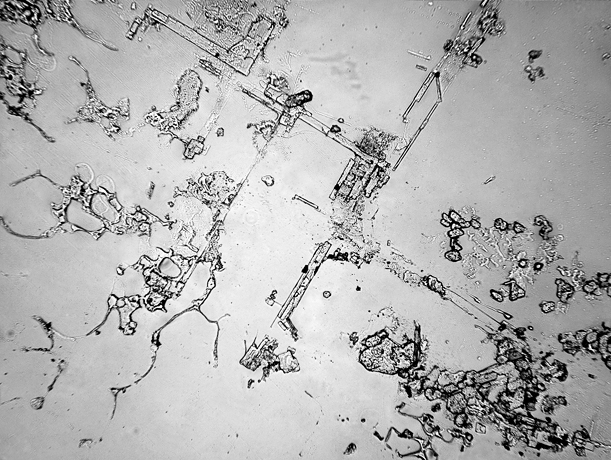
Tears cleanse our fragile eyes and heal our broken hearts. In fact, I recently learned there are three different types of tears — basal, reflex and psychic. Basal tears lubricate, protect and hydrate the cornea. The reflex variety responds to dust, irritants and allergens. And psychic tears are associated with our strongest emotions, designed to help us release profound sorrow, as well as overwhelming joy. I think this mysterious dual purpose of emotional tears is a metaphor for the journey of grief and perhaps, life.

Just as I was sitting down to write a journal entry, Linda, one of my oldest and dearest friends texted me a fascinating article about tears in the Smithsonian Magazine — and a wish for me more tears of joy today. Turns out, they are the exact same thing but perform different tasks. Since I embrace synchronicity, I clicked.

The microscopic images of all three types of tears peppered the article — depicting an entire lifetime, a complex universe in a single droplet of liquid. Oh, the stories they tell. As the article suggests, all the images look like “aerial views of emotional terrain.” Distant, elegant and provocative. That is so Elliot. Immediately, a rush of memory saturates my heart and then trickles down my cheeks. He adored World War I aircraft from day one — mastering the Red Baron computer game as a toddler and scrutinizing ceiling fans as if they were propellers as an infant.

I suspect Elliot was always meant to fly.

These maps are so dense, intricate and difficult to decipher. They all are a tangle of jagged paths, circuitous routes, and sharp corners . . . ins and outs, dead ends and drop-offs. Ah, this is the true journey of grief, and perhaps, maybe, of joy? That is why everything — even the so-called “happy” memories are as cloyingly bitter as they are sharply sweet — piercing my heart as they sometimes bring fleeting wisps of comfort to my weary soul. They are inextricably intertwined, like a strand of DNA. Is that the new definition of moving through grief — moving with grief? Finding a way to experience both love and excruciating pain at the very same time — as one? Still not so sure about the joy part. But there is grace in it.

No matter what, this is a brave new world, uncharted terrain and an unknown land. How can I possibly know what it would take to feel safe to live with this pain — when I barely know what I want for lunch? And then I question that decision. I think it’s about being fully present and mindful. It requires relentless self-compassion and intentional awareness — moment to moment, breath to breath, tear to tear . . . and heartbeat to heartbeat.

It’s the only way.

For my dear son, always in my heart — Elliot Everett Wright (5/17/1992 – 8/5/2018)