
HELP. THANKS. WOW.
The brilliant Anne Lamott says these are the only words you need to pray in tough times, and they are resonating with me deeply at the moment. Anne is a wordsmith of the most succinct order. Love this—especially since I have been grappling with the concepts of prayer and faith for much of my life—but more so, lately.
As Anne demonstrates, prayer does not have to be complicated, but it can be tricky. I think she and I are on the same page about what it’s not—a wish list for existence or a direct line to the heavenly fulfillment department. In fact, I have intentionally discarded the practice of praying for things—for outcomes and events that I want or wish to prevent for myself or others.
Prayer does not work like that. At least, it never has for me. I don’t see God as a short-order cook or a divine delivery service. Wouldn’t that be nice? Order up! But if God functioned like an anthropomorphic Amazon.com, I think we’d have a very different kind of world. Grace delivered—overnight? Imagine . . .
Regardless, I’m thinking the universe’s operating system could use a reboot, as Elliot would always recommend when things got stuck in my cyberworld. Or possibly, a scalable upgrade? Doesn’t a cloud-based solution make perfect sense? Just sayin’. But I digress.
I may sound a little jaded, but I come by it honestly. I have been traveling this bumpy spiritual road for more than half a century, with my tail up over the dashboard, as my dad used to say. So instead, I now pray for alignment with divine order, that is, the radical acceptance of what is—and the strength to live with whatever happens in this world I don’t comprehend, whatever that might be.
After the death of my oldest son, Elliot, forever 26, almost three years ago in a still-unexplained motorcycle accident, I know that praying for anything specific is pretty much pointless. There is some greater agenda far above my paygrade at work. I have even tried praying in present tense: He is safe. We are whole. There are no guns. COVID is eradicated . . . the list goes on. But that’s not it, either, because the vastness of all creation is simply beyond all knowing. Period.
I have gathered lots of empirical data on this. My conversations with God have been constant and frequent for as long as I can remember—when Elliot was riding those damn motorcycle(s), driving those Hot Wheel-sized Miata roadsters —and indulging in other more ambiguously risky behaviors, of which I have only sketchy knowledge. And when I was navigating the terminal illnesses and dysfunctions of the rest of my dwindling family.
I think the playwright analogy feels most apropos. Could Hamlet ever ask Shakespeare for a different outcome? “Dear Will, uh, I’ve changed my mind. I really do believe in marriage. Can you forget about what I said about that nunnery thing?” Or could George and Martha prayerfully seek divine guidance and couple’s therapy to disentangle their codependent vitriol in “Who’s Afraid of Virginia Woolf?” Nope, not going to happen—impossible. It’s not part of the construct. The two worlds will never directly intersect.
Here’s what I do know.
All we can do is hold others (and ourselves) in our hearts and minds with compassion—wrapped in the fierce energy of love and light. I believe prayer is more about recognizing and summoning God’s universal love to fill our own souls with peace and comfort. People say prayer “works,” but I’m not sure exactly what that means. Yet I do believe in the electricity of prayer—the dancing quarks of psychic energy that ricochet in our hearts and out into the quantum field. That’s the essence of God—in all of us. I have definitely felt that phenomenon—like the waves of love engulfing me on Elliot’s 29th birthday last week. Yes, prayer is real — but not in an “I’ll have fries with that” sort of way. We have no clue what’s driving this massive creation business. None. More questions than answers. A complete mystery. We love in spite of all of it—not because of it all.
I became obsessed with this prayer notion following a profound Faith and Grief retreat I was invited to attend two weeks ago. The leaders, Mike Shaw and Fran Shelton, brought a gentle, Christian perspective, but the experience was faith agnostic, open and affirming of all spiritual paths. There were no dogmas, no rules. The space was a loving container of inclusiveness, breath and spirit. Nourishing, bittersweet grace.
We convened to consider the wisdom of the Clifton Strengths, a business-performance coaching tool, in the context of grief. As we identified and unpacked our unique personal strengths, we also were encouraged to expose and sit with the most uncomfortable truths of grief, such as lament, guilt and anger. Feeling our emotions fully is essential to forging the strength to live with devastating loss and find a way to carry grief and gratitude simultaneously. I am deeply grateful for this loving group—and the mystery that has enfolded me through their support.
Mystery is part of grief, death and life, too. It’s ambiguous, ephemeral and vague, but at the same time, it might be the only safe place for my heart right now, still shattered and precarious. There is a sort of cosmic mooring in the acceptance of not knowing. And yet, it’s also so unsettling.
Mystery is my only certainty.
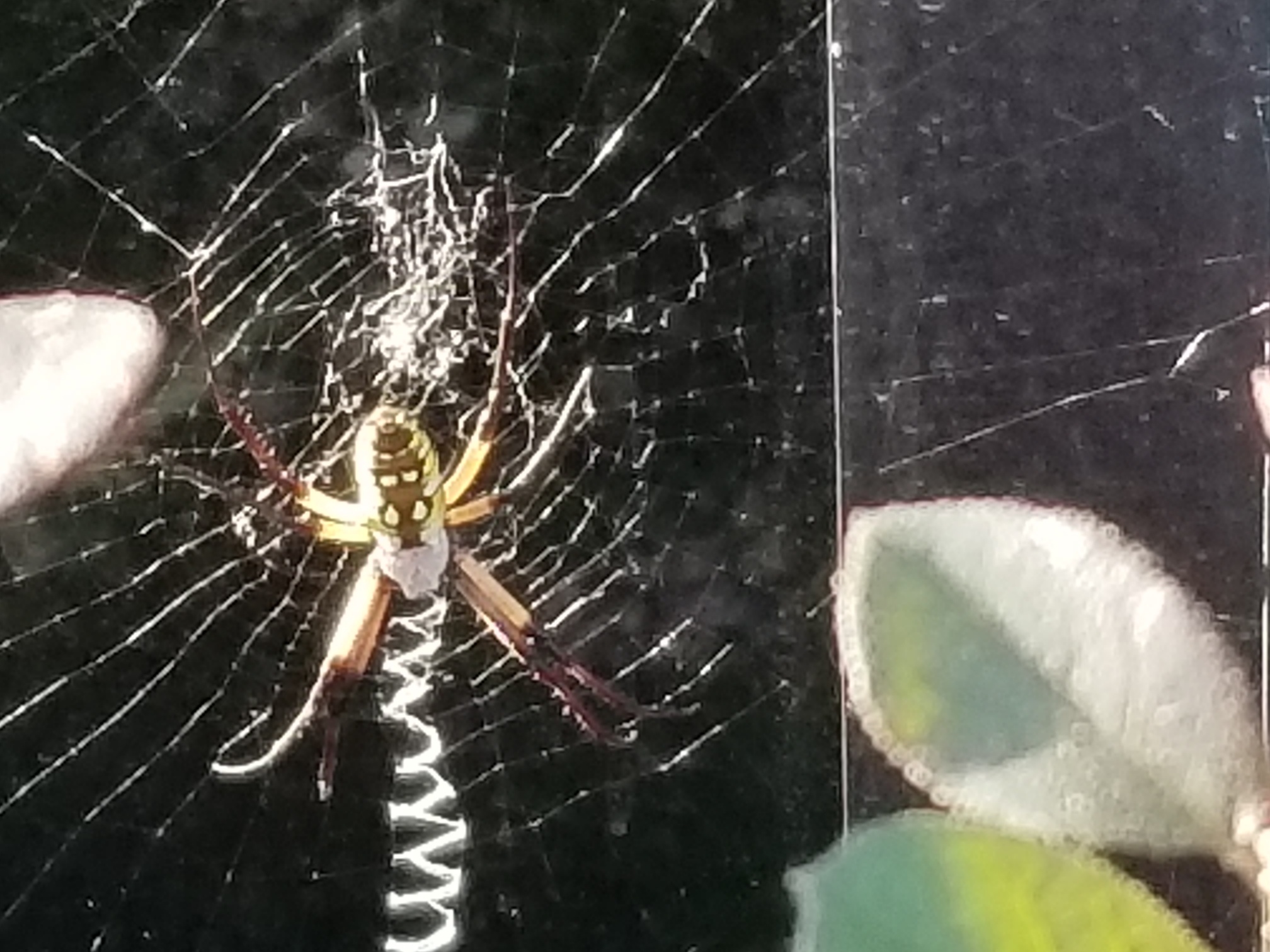
I think that’s why my fascination with nature has intensified so—like being mesmerized by a spiderweb. It’s a potent symbol of the persistence of creation, the unending circle of life, and our microscopic place in the scheme of all things—another concept that is both comforting and overwhelming. I’m reminded of an image from a late-career Eagles song, “Waiting in the Weeds”:
The ebb and dart of a small gray spider spinning in the dark,
In spite of all the times the web is torn apart.
I love these lines so much, and I am energized by connecting dots. The exercise grounds me somehow, giving me a place in the grand mosaic of things—a sense of value, a way to be, belong and contribute. That’s probably why I am such an avid collector of information and asker of questions—to accumulate more data and fodder for connections. After all, it’s one of my Clifton Strengths—Input. But lately, there are just too many questions with inadequate answers. No answers to so many and many, too heavy to carry.
I am weary.
I’m tired of my own curiosity. So many questions that lead to pain, confusion and despair. Oh, how I want the moment to be enough, free of all the baggage, but I am such a different person now. I can’t get used to it. I want to feel more like the “Possibilities Elaine,” again, more hopeful and content. Perhaps, as I continue to notice nature’s eternal cadence, my heart will feel more at ease. I will cherish my oneness with creation . . . and with the raw mystery of it.
The ironic addendum is that in the wake of questioning prayer at the Faith and Grief retreat, I wrote a prayer. As Hamlet would say, “There’s the rub.”
Source/God:
Help me accept the deep mystery of all creation—
that is beyond, all knowing, as I carry the bitter and
the sweet in peace that is beyond, all understanding
my thanks for the Divine gift of your love everlasting.
Help me harness my unique strengths and talents.
to see, serve and enrich others—enveloping
me as I find meaning in the darkest of hours and
glimmers of grace in the deepest of sorrows.
Help me embrace your infinite comfort and
wisdom in the profound acceptance of what is—
as I encounter each new moment in wonder
and gratitude for this “one wild and precious life.”
Wow, Elaine
What are your thoughts about grief and prayer? I would be honored to connect.




 Elaine Gantz Wright