Reeling from 2016? It’s in the numbers.

“Sometimes things fall apart so that better things can fall together.”  ― Marilyn Monroe

clock2016

The agony and angst of 2016 are palpable. A grueling and malignant election cycle, combined with pernicious social unrest ― and the loss of too many beloved cultural icons to count have left us dazed and devastated.  So many friends and colleagues are anxious to bid 2016 a swift farewell, but I have recently stumbled on a compelling contextualization.

It’s about the numbers. After all, we seem to be a society obsessed with metrics. We are constantly parsing, computing, digesting and analyzing the data. We warehouse it, mine it and dump it ― but what about the most ancient of calculations ― numerology? Whether you embrace the metaphysical realm or deal solely in the concrete, it’s difficult to completely discount the math.

That is, 2016 is a “nine year:” The end of a cycle.

How does this work? Well, numerology is the study of numbers and their harmonics. Like those who question astrology, auras and chakras, skeptics abound. But who has all the answers?  Plus, this feels more like the mirror than the smoke. Without going into the granular detail, the Pythagorean system of numerology considers the cosmic significance of numbers associated with names, birthdays and years. That makes 2016 a “nine year.”

Do the math:

2+0+1+6 = 9

2+0+1+7 = 1+0 = 1

Clearly, we are living the completion of a particularly volatile and significant nine-year cycle.  Next year, 2017 will be a “one year.” A “nine year” heralds significant change and brings to fruition what began in the previous nine-year cycle. It’s a time of shedding old skin and trying on new ways of thinking and existing.  Where were we in 2007, the end of the last nine-year cycle? Where were you in 2007? George W. Bush was president, and we were about to elect Barack Obama, the first African-American president in history in 2008 ― commencing a remarkable cycle fueled by the audacity of hope. But now, that cycle is ending ― as we enter another new era.

A “nine year” is a time of completion, resolution and forgiveness, says one numerology site.  You can even calculate your personal-year number for 2017. Mine is “five,” which also foretells change, new adventures, relationships and adventures. I’m ready.

The interesting impact of a “nine year” is it focuses on cleaning up unfinished business. And if we resist the closed doors or deny the new horizons, we will not see the new realities. Daunting stuff. So, the numbers tell us it’s time to learn from the past, radically accept it, and decide how we want to build the future in the next nine years. It is a time to jettison old thinking, pursuits, habits and relationships that no longer serve us. Another great quote:

“The only real battle in life is between hanging on and letting go.”  -Shannon l. Alder


That one has resonated with me deeply this year ― as I seem to have been entangled in perpetual tangos with many aspects of life. However, what I have discovered is change begins within ― in each individual heart and mind. As we end 2016, it’s time to reach your conclusions, and tie up your loose ends. Clean out your closets and make more room. This will help you step into the next nine years free of unresolved traumas and challenges that might hold you back.

Apparently, it’s natural for a “nine year” to be highly emotional.  It can even feel like it’s taking you backwards, but the purpose is to help you learn the lessons that keep you stuck. This is a necessary process to release old emotions that might be triggering you in the present ― impeding your progress. We may be evolving spiritually as a society in ways we cannot fully fathom right now. Sometimes, painful experiences are required to help us grow. Perhaps, it is no coincidence that some of our most beloved creative voices have left the earth this year ― at a time of such disruptive transition.  I think we are likely on the precipice of an unparalleled period of seismic spiritual realignment.

So, what will the “one year” hold?

Who knows? But 2017 is the number of beginning ― the dawning of something altogether new. The “one year” is time to act independently ― but also to lead by example, putting your unique talents to work for the greater good and the community as a whole.

The great news about 2017 is that transformation is an integral part of the equation. Be open and be ready. Fasten your seatbelts; it going to be a bumpy, high-velocity ride. Embrace positive expectancy.   Anything is possible ― with hope, faith, love ― and a clean slate.

The Rest of the Story

scrabble-wordsWhen I speak to groups or clients ― I like to describe myself as a translator of sorts.  I interpret a need or message for a specific audience. I help make that high-voltage connection that triggers the response or behavior desired.

In our first installment, we covered components one and two of the high-octane story or appeal:

  • The Pain
  • The Problem

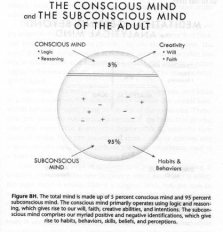
And to review ― we structure the story intentionally to address all key information receptors/processors in the brain ― the emotional, logical and habitual brain circuitry. After all, we learned from Dr. Joe Dispenza in Breaking the Habit of Being Yourself that “our conscious minds comprise only about 5% of who we are. The other 95% is a composition of our subconscious minds ― our habits and behaviors that have been deeply programmed on our mental hard drives throughout our lives.”

Next, let’s tackle the elephant in the room. The Solution.

I always start with the questions. How are you changing or improving lives like the one featured in the appeal? How are you delivering differentiated value? How are you uniquely positioned to effectively deliver this solution and make a measurable impact? What will happen if you don’t act?

Begin with the specific and broaden to a vision of scalability that can happen only with the donor’s involvement. It’s not “we.” It’s “us.” Involve the donor or customer in the solution. As an example, here’s a story about an organization* that provides medications to isolated, under-served communities worldwide:

“Our mission of providing essential medicines to those in the remotest locations around the world is very personal to me,” says Sam Doe, president and CEO of [Organization Name]. “Born in Thailand, I contracted polio as a child and lived in an orphanage until I was adopted by a family from the U.S. at age eleven.” 

Now, Sam wakes up each morning in America and pulls on his full-length leg braces — a daily reminder that he did not receive the polio vaccine as a boy. “On the bright side,” Sam teases, “since my shoes are attached to the braces, I never have to look for them.”

Last year alone, [Organization Name] delivered enough medicines and supplies to treat more than 25 million girls and boys in desperate need around the world. More important to Doe, each treatment represents one face, one child and one life — one more son, daughter, sister or brother who is receiving healing, health and hope.

With your help, suffering cannot prevail.

[*Where appropriate, I have changed names to protect client confidentiality.]

So, we have set the stage with the possible. We’ve created the case. What’s next? Now, it’s time for the climax of our story.  As Samuel Goldwyn said, “We want a story that starts out with an earthquake and works its way up to a climax.”

OLG_visionThe Ask

This is Fundraising or Sales 101. The whole letter or email is moving toward this pinnacle ― building on the “Why you, why now, why here?”  And this is often the place we falter in writing these critical communications. We forget to ask ― and do so directly.  We paint the picture and talk about what we do ― but this is where we drive it home.

Web/Digital Example from the University of Dallas:

JOIN US ON OUR LADY’S JOURNEY

The Shrine of Our Lady of Guadalupe is a special space on the University of Dallas campus devoted to our Blessed Mother Mary. Conceived as a sanctuary for students, alumni, faculty, staff and the community, it serves as place to meditate, worship, reflect, breathe and be — amid the chaos and commotion of Dallas/Fort Worth, the fourth largest metropolitan area in the nation. 

Situated atop one of the highest observation points in the Metroplex, the Shrine also incorporates the ancient, treasured stone of Tepeyac ― positioning UD among the globe’s most significant sacred locations for the Catholic community. Inspired by Our Lady of Guadalupe’s story as patroness of the Americas, we look forward to finishing the permanent grotto, fulfilling the vision of the Class of 1997 ―and completing the campus’ miraculous spiritual destination.

SHARE THE STORY OF THE SHRINE AND UD <links>

  • Explore a Shrine and Synchronicity: Our Lady of Guadalupe and the University of Dallas
  • Experience the Creation of a Shrine: The Art of Faith: 
  • Marvel at the Miracles of the Madonna: The Science of Faith: 

Support the Shrine and Learn More<Link to info signup and giving.>

There will always be a place to pause— and a candle to light . . .


Only one final installment remains in the story of the story. Take a deep breath and stay tuned.

If you’d like to learn more, sign up on my website. I would be honored to review one of your appeals, as well.  It’s all about maximizing your appeal. It all starts with the story one.

← Back

Thank you for your response. ✨

Inspiring Response: 5 Ways Story Can Turbo-Charge Your Message

writeheart“Story is the DNA of all meaning.”  – Annette Simmons

Do your appeals have undeniable power? Do you enthrall, captivate, motivate ― and drive response?

With only weeks remaining in 2016, the cavalcade of carefully crafted requests will soon commence. For most of us, they will arrive from all points, directions and media ― email, snail mail, APPs, Facebook, texts and tweets. What will grab us? And more important, what will snag the  imaginations of our prospects? What will be deleted? Filed? Ignored? Dismissed? Or worse . . . unnoticed?

Some will be cloaked in gratitude. Others will lament the ubiquitous budget gap or unexpected organizational need. Still others are likely to promote a seductive donor challenge, captivating contest, new initiative, capital effort or recognition group.

But they should all have one thing in common ― a compelling story.

What’s the hook? And I’m not talking about a cheesy advertising gimmick or giveaway.  The power to resonate comes from the human, emotional connection.

Big, looming, seemingly logical organizational problems ― like deficits, shortfalls and even unmet needs are just that. The organization’s problems. As communicators, we must focus on the donor’s or prospect’s needs ― they are often triggered at an imperceptible, emotional and even subconscious level.

Though Marshall McLuhan might argue, the message is just as salient as the medium in this case ― especially given the media miasma engulfing us at every turn.  As I wrote in a prior post, I feel effective messaging must address the entire brain ― engaging the emotional, logical and habitual brain circuits.

Behavioral economist George Lowenstein confirms “our subconscious explains our consumer behavior better than our conscious.  Ninety percent of all purchasing decisions are not made consciously.”

Working as a writer, communicator and crafter of hundreds (maybe thousands) of appeals and calls to action throughout my career to to date, I have identified a few key elements that are absolutely essential.  [Where appropriate, I have changed names to protect client confidentiality

The Pain

This is probably the most important concept. And it’s personal.  What is the emotional state ― or discomfort your message can resolve for the prospect or donor?  According to brain theory, everything begins with an emotional nudge, which connects to the cerebral cortex or executive function of making a decision.  And the most important thing about framing a powerful request or appeal is articulating the pain in an intimate, relatable, visceral way. Compare these two.

        “I was deployed in Saudi Arabia on 9/11 . . . And I can still hear the screams . . .”             

         Corporal John Ray’s* battle-weary voice cracks and catches in his throat.

        “We were in combat overnight . . . and we weren’t prepared,” says the slight, sandy-haired U.S. Army veteran ― as he slowly brushes a single droplet of sweat from his brow. 

       “The nightmares never stop, but I just wish I had enough to eat . . . “

                                                                       (versus)

       “Veteran hunger is a growing problem in America . . . And their struggle is significant.”

The top copy is weaving a human story that’s drawing the reader into a specifically defined conflict ― not a daunting global cause that is difficult to quantify ― or feel. More to the point, one tells and one shows.

The  Problem

The next step is the core challenge or problem.  How does this pain manifest, and how does your organization or operation contextualize the issue you are addressing? Get granular. Explain why is your mission is significant, and why should we care? Again, it’s important to construct a very personal, human narrative. Here’s an excerpt form a letter:

It was January 2007. I was on a mission trip that rattled me to my very marrow ― and ultimately changed my life forever. We brought more than 285,000 nutritious meals for hungry, struggling children who were barely surviving in the war-torn squalor.

Shockingly, the meals ran out too soon. There were just too many suffering, vulnerable girls and boys like Maribel  . . . in such dire need.

 We simply did not have enough to go around . . . All  I could do was stand there and weep. So, I had to do  something. 

Are you hooked?  And better yet . . . are you wondering about the next three components? Well, you’ll have to stay tuned for these and other stories. It’s a real cliffhanger . . .

In addition to the five pillars of a great appeal, there are  many other components of your content concoction. Of course, we must artfully integrate urgency, all calls to action, testimonials/success stories, various digital platforms, and customer relationship management (CRM) interfaces. But start with this formula. Start with the IMPACT ― and you will definitely turbo-charge your results.

If you’d like to learn more, sign up below. Tell me about your project. Also, watch for the next installment.  Maximize your appeal. It all starts with the story of one. 

← Back

Thank you for your response. ✨

The Art and the Science of Infinite Possibilities

“I look at you all, see the love there that’s sleeping . . .”

— George Harrison

guitarI was taking my morning walk in the crisp Texas air on Sunday and listening to the “random shuffle” on my smart phone. As indicated with crystal clarity here, there are no accidents ― a pattern to the randomness usually emerges. And George’s message in “My Guitar Gently Weeps” impacted me on a profound, new level. Admittedly, we all have our favorite Beatles’ songs, and this is definitely in my top five.

“I look at you all, see the love there that’s sleeping 
While my guitar gently weeps
I look at the floor and I see it need sweeping
Still my guitar gently weeps.”

In sync with this moment, I was attending a dazzling event over the weekend called #DreambuildersLIVE, and I thank Unity Church Dallas for offering special access to the experience.  This was the Mary Morrissey show, and she is certainly a magnetic maestro of meaning ― orchestrating mesmerizing messages in “a container” of multimedia magic.

One of her fundamental life-coaching principles is “notice what you are noticing.” This reinforces and supports my current journey ― as I find it requires vigilant practice. I think of it as “uber awareness” or “turbo mindfulness.”  And it’s essential, because our dreams all start in our own hearts and minds ― an inside job. Deftly unfolding this concept, Mary polished many glistening enlightenment nuggets in her approachable, warm style. “You can’t get TO your dream ― you must come FROM it,” says Mary. Letting that idea seep into every molecule is potemt as I envision and feel my future joy in the now ― the present moment. Be the change. Live the dream. (Need more practice.)

In this iconic song, George is definitely noticing what he is noticing. And though that darn floor is filthy and his guitar is gloomy, he chooses to see the “love there that’s sleeping.” I have read he wrote the song at his mother’s house in Warrington, England as he contemplated “I Ching, The Book of Changes.” It’s regarded one of the most important texts of Chinese wisdom and philosophy ever scribed, and it was a foundational source for Confucius and others.

I believe one of the notions George is referencing is the ethereal mystery of relationships and the interconnectedness of all things and beings in the universe.  Our oneness with all ― and one for all time. Just beginning to embrace these ideas based on ancient philosophies, twenty-first century science is now studying the hidden, untapped power of the brain and its relationship to the quantum field. In fact, “Make it MATTER” is another great Mary-ism ― linking meaning with quantum change and infinite possibilities.

Yes, Mary is vibrating at a higher frequency ― and creating a surge in the process. You could feel it in the room of more than 750 people from across the globe gathered here in Texas for a nexus of relationship and intention to generate something wonderful and good.  So refreshing as we notice . . . our “political floor may need some sweeping.” But . . .

“With every mistake we must surely be learning.”

Emotional Intelligence

JP_BrainIt seems so simple.

Our thoughts create our reality. Research tells us our brains are constantly changing, evolving and reconfiguring in response to our environments and every new nugget of data we encounter.  But, how many of us really pay attention to our thoughts ― every single notion swirling around in that molten miasma of emotions, desires and unconscious habits?  Well,  Dr. Joe Dispenza is answering that question, and he says we can actually rewire our brains to create whatever we want ― out of our own primordial stew.

Nerve cells that fire together wire together, “ Dispenza says.

So lately, I’ve been thinking about this perplexing cerebral frontier in the context of marketing. Dispenza confirms what I learned more than 20 years ago when I did some work for an innovative boutique market research firm called Addison Marketing Group.  It all starts with basic anatomy ― we have three brains:

  • Neocortex ― the newest, most evolved brain. It is walnut-shaped and governs conscious awareness, cognition, problem-solving, language and information gathering. It is the brain’s CEO.
  • Limbic Brain ― the emotional brain. The size of a lemon, it controls functions related to anger, happiness, fear, as well as memories ― and regulates internal chemical order.
  • Reptilian Brain or Cerebellum ― the oldest brain. It maintains habits and holds the seat of the subconscious mind.

Here’s the rub ― each one of these brains communicates using a very different language.  Understanding how they function can definitely inform our approaches to building effective marketing strategies ― not to mention enhance our mental health and happiness.

Though I was introduced to the concept of “Whole-Brain Marketing” many years ago, it’s resonated with me throughout my career ― and produced consistently powerful results. The idea is this:

  • Lead with a compelling message to trigger an emotion, such as a pain point . . . (Like: Is the Hassle of Finding Leads Wearing You Out?  (or) When her nightmare becomes her reality . . .
  • Follow with logical reasons to act/buy
  • Provide an easy, comfortable way to conduct the transaction

This sequence addresses the neocortex, the limbic brain and reptilian circuitry. The challenge is in identifying the appropriate subconscious messages ― and the execution, of course.

The alchemy of message creation and testing becomes even more complex when you consider Dispenza’s revelation that even when we do engage our conscious minds, they comprise only about 5% of who we are. The other 95% is a composition of our subconscious minds ― our habits and behaviors that have been deeply programmed on our mental hard drives throughout our lives. In fact, behavioral economist George Lowenstein confirms “our subconscious explains our consumer behavior better than our conscious. 90 percent of all purchasing decisions are not made consciously.”

If people aren’t aware of their own truth, shouldn’t we question the veracity of any traditional polling of market research? We are all making choices and decisions, but we really don’t know why. It’s sobering. Certainly, we are all driven by unconscious motivations to varying degrees ― unless we have done lots of therapy or meditative work.

That’s why mindfulness is so important. Mindfulness is the process of actively noticing new things — putting ourselves in the present moment and taking responsibility for our reactions.  This gives us room to respond. It’s the ancillary judgments we bring to the “party” or a situation that cause us pain, anxiety and suffering.

Practices such as meditation and quantum healing can begin to tap into the vast 95% ― so we can become clearer about who we are and what we want. Dispenza says that’s how we change our brains ― and the world. It’s how we start rewiring our minds to be at peace with ourselves ― and then, every relationship in our sphere becomes more peaceful, expansive and loving.

It’s an #insidejob.  Are your marketing mindfulness?

Thriving Trumps Narcissism

Art-Painting-American-Flag-Wallpaper-HD“Before directing the lightning in the sky, we must first harness the storms in our own hearts.”
—from Rasur by Roberto Brenes Mesen

As America’s fascination with Donald Trump continues to mystify me and many others across the globe, I believe I have a heightened sensitivity to his shenanigans and rhetoric, because I have struggled mightily to break free from toxic narcissists and unhealthy relationships. It’s a little like the smoker who has kicked a noxious 10-year habit. Daily, I am mindful about elevating my consciousness to recognize these insidious hooks — toning my exit muscle.

Narcissists are not intrinsically evil — as many contend, but they have developed hard-wired coping behaviors to compensate for their own deeply damaged psyches and false selves. On one level, my heart breaks for them and I do feel empathy ― even for those who have caused me such profound pain. Thankfully, I have learned that I am not responsible for their harsh judgments.  I am only responsible for my response to them.  There is absolutely no “fixing,” “repairing,” “convincing,” or “cajoling” these people.  They are who they are. That is it. The healing journey is stepping away from the tango.

Narcissists seduce, ingratiate, self-aggrandize, manipulate, denigrate and exploit, because they are desperate to neutralize their own shame ― and they have limited capacity to access their authentic inner selves.  Indeed, individuals with Narcissist Personality Disorder are perpetually looking for affirmation of an idealized, flamboyant, yet fragile, sense of self.

Et tu, Mr. President?

From a purely clinical perspective, the Diagnostic and Statistical Manual of Mental Disorders (DSM-5 criteria) Narcissistic Personality Disorder is signified by satisfying  5 of 9 of the following standards (American Psychiatric Association, 2013):

  • A grandiose logic of self-importance
  • A fixation with fantasies of infinite success, control, brilliance, beauty or idyllic love
  • A credence that he or she is extraordinary and exceptional and can only be understood by, or should connect with, other extraordinary or important people or institutions
  • A desire for unwarranted admiration
  • A sense of entitlement
  • Interpersonally oppressive behavior
  • No form of empathy
  • Resentment of others or a conviction that others are resentful of him or her
  • A display of egotistical and conceited behaviors or attitudes

Philosopher and teacher Deepak Chopra said this recently:

“But in reality Trump isn’t bizarre or anomalous. He stands for something universal, something right before our eyes. It’s an aspect of the human psyche that we feel embarrassed and ashamed of, which makes it our collective secret.  Going back a century in the field of depth psychology, the secret side of human nature acquired a special name: the shadow.”

The coping mask of the narcissist is an amalgam of arrogance, entitlement and pretentiousness. He or she often professes to know all the answers to all the questions ― while monopolizing all the conversations. A narcissist may become indignant at the drop of hat ― or belittle anyone in any role if he does not receive the service or treatment expected.  I witnessed this countless times in relationship with narcissists, but I always thought things would eventually get better somehow.

Finally, the reality kicked in. Having been the frequent recipient of this vitriol, I now know this comes from unresolved anger — often unconscious. A narcissistic reacts abruptly with rage or contempt to feel superior. And he can’t stand any perception of criticism. He may even abandon you ― anytime, anywhere. I know.

But, as narcissistic abuse recovery expert Melanie Tonia Evans insists, focusing on the NARC does not help or heal us. There is no cheese down that hole. Therefore, we can analyze Donald Trump all day long, but the more we try to inspect, explain and prescribe, the more deeply we become hooked. That’s the painful irony. It becomes an excruciating no-win scenario.

“It’s like trying to wrestle an ape,” says Evans. “Impossible.”  And the real reason we do it is because we are trying to soothe our own unhealed wounds by somehow fixing and placating the narcissist. We are assuaging our own concealed feelings of inadequacy, pain and unworthiness.  His grandiose promises attract us like the circus coming to town ― filling the darkness of our hearts momentarily with sparkles of light, some cotton candy and cheesy spectacle, but as when the circus leaves town, it also leaves us desolate, depleted and feeling a little sick.

He tells us just what we want to hear ― and then, he turns on a dime and crushes us to the mat. In Trump’s case, he calls someone “an idiot,” the world “a mess,” or mocks a disabled reporter. This pumps up his ego and self-esteem. It becomes a seductive, unending cycle ― until we decide the healing must happen inside ourselves. Evans calls this the “Thriver Model.”

That’s just what we must do as a nation.

We must face the deepest unresolved traumas of our early and recent history ― racism issues that have festered since the days of slavery, institutionalized inequality, fraying of the middle class, lethal police culture, gun violence, and the list goes on . . . we must heal them from within. Individually, we must feel better about ourselves; love ourselves and each other deeply and truly — so we are not prey to the brittle, smarmy, sanctimonious charlatans.

Trumping Survival Programs

Melanie Tonia Evans says the purpose of any relationship is to reflect back and trigger unhealed parts to help us evolve and grow ― individually and collectively. With a narcissist, this opportunity is amplified and intensified, because he or she eventually obliterates our fragile survival programs.  But in a sense, this is a gift, because we can take the wake-up call as an invitation to heal what is broken in ourselves. We have the power to become whole, productive suppliers of our own support, vitality and affirmation. We do not need to look externally for validation or worth.

When we deny, disown and mask the most vulnerable parts of ourselves to ourselves ― all the fears and pains, our abuse radar does not operate effectively. This leaves us out of alignment with our true selves ― and exceptionally needy. We are unconsciously replaying tapes from our families of origin, and in the case of the election, the early and recent years of our adolescent nation.  So, we need to get real.

We are not inextricably attached to this difficult person. We do not need to make this relationship work to survive. We do not need Trump to take us to some sort of vague “great place.”

It’s time to wake up, America! It’s an inside job.

Stream of Consciousness

teardropI am a seeker ― with far more questions than answers, and in recent days, my queries have been dramatically outnumbering my explanations.  Fortunately, in the past decade, my lifelong spiritual quest has led me to the sagacious sphere of one Dr. Joe Clifford.  And that’s why I pen this post today.  Alas, I am struggling with his recent announcement that he and his family will be leaving our frazzled city in less than a month. Intellectually, I know this sadness will pass, and Dallas/#DallasStrong will persevere somehow, but I still feel an overwhelming sense of  loss.

References to Joe’s canny wisdom and his super-human pastoral care shimmer across the pages of my blog like freshly cut gems.  Since 2009, the content I have crafted here has included both professional and personal musings ― more like a meandering stream of consciousness than a stake in the ground, but these ideas started spilling forth way before Twitter was cool and Snap even considered Chatting.  And, this stream has definitely ebbed and flowed . . .

Now, thinking about the soul-rattling events of recent weeks and days, my own profound healing journey over the past seven years, and Joe’s impending departure, I can’t help but recall one of the first posts I was ever inspired to write. It was about a “Joe sermon.”  And several years later, I actually had the good fortune to do some “official” blog writing for First Presbyterian Church ― helping amplify the impact of Joe’s insights and the Word of God.  A career highlight and honor. 

An excerpt from that April 2009 post:

Joe has an extraordinary capacity to inform and enrich my path in ways that are difficult to articulate. Today was an excellent example. He talked about the celebration of Easter wearing off as we entered a week punctuated by the bleakness of tax day, difficult professional challenges ― real life, etc. Then, he said a friend forwarded him the Susan Boyle link on Wed ― the astonishing performance of the unassuming 47-year-old on Britain’s Got Talent, who has captured the world’s imagination. He says he does not have time for all the forwarded email he receives, but he opened this one for some reason.

He said he wept ― and he asked the congregation how many of us had seen it and wept. Most of those present raised their hands. He went on to describe theologian Frederick Buechner‘s take on the origin of these tears. I now cannot get enough Buechner. He ponders:

How do you listen to your life? How do you get into the habit of doing it? How do you keep ears cocked and your eye peeled for the presence of God or the presence of anything else? One thing I have said, which I think is true, is to pay attention to any of those moments in your life when unexpected tears come in your eyes. You never know when that may happen, what may trigger them. Very often I think if you pay attention to those moments, you realize that something deep beneath the surface of who you are, something deep beneath the surface of the world, is trying to speak to you about who you are . . .

They are not only telling you something about the secret of who you are. More often than not, God is speaking to you through them of the mystery of where you have come from and summoning you to where you should go to next.

Joe said we have a profound, spiritual reaction to joy ― to God. And it’s not enough to experience the moment ― we must use it as a way to discover our own life’s calling, what God has called us to do and be.

The world is hurting ― facing daunting challenges. I believe we are called to pay attention, be vigilant in our consciousness, and bare our hearts. Thank you for helping us do all of those things along the way, Joe.  Godspeed to you and your family . . .  with a smile and a tear.

This may not be Susan Boyle, but it’s a moment ― for now.