Grieving Power: Finding Your Way in the Dark

Life is precarious.

Texas and the universe demonstrated this truth with debilitating intensity last week. Indeed, we are living in a time of radical transformation, a period without predictability or security. Socioeconomic upheaval, geopolitical unrest, erupting racial tensions, escalating cybersecurity threats, and climate change are all coming to a head. And oh, and this is all happening in the midst of a global pandemic.

I will admit I am hypersensitive as I navigate the agony of my own grief, but the world is becoming increasingly fragile and complicated. Control is an illusion. Sure, we can decide whether we turn on a flashlight or light a candle in a blackout, but how do we manage our lives with any kind of certainty? So many directions, but nowhere to go.

When most all the infrastructure services that are designed to support and protect us in arctic temperatures fail catastrophically, our trust evaporates. And we panic. Plus, we’re back to ground zero on Maslow’s famed hierarchy of needs. Forget self-actualization — I’ll settle for flushing my toilet.

And amplifying the precariousness is the capriciousness of it all. Some people are still without any power in Texas; some are boiling every sip of water they drink; others are recovering from extended rolling blackouts (like us), and others had no disruption at all. Then, there are the food supply-chain disruptions happening now and broken pipes everywhere you turn.

Yet through all the chaos, I have been grateful. I have appreciated my 24-year-old son Ian’s calm, grounded presence, as well as the kind texts from friends across the country who checked on us — though I could not always read them in real-time, because our cell service was toast, too. I was grateful for the vigilance of our building management and our dedicated maintenance team. They worked tirelessly to repair broken pipes, open locked-down security doors, and silence errant fire alarms. I may say everything reminds me of “The Twilight Zone,” but the building seemed to have a will of its own at times — like it was mischievously misbehaving.

As the days oozed into nights without power, heat, internet, or cell service, I also remembered the “Twilight Zone” episode called “Midnight Sun.” Lois Nettleton played an artist who was suffering in stifling summer heat, painting abstract canvasses dripping with pigment. Alas, the earth had fallen out of its orbit and was moving closer to its central star. The obligatory twist occurs (spoiler alert) when the opposite is true. In actuality, artist Lois has been nursing a raging fever. When it breaks, we discover the earth has been plunged into sub-zero temps as it is jettisoned from the sun’s orbit. A potent metaphor.

“Twilight Zone” or not, I was scared.

I still am, but I’m aware my fear is exacerbated by the trauma and shock associated with losing my precious 26-year-old son Elliot in a flash of indifferent tragedy 30 months ago. His untimely, out-of-order death continues to rattle me to the core, each and every day — so sudden, senseless and shocking. C.S. Lewis said, “Grief is like fear, but you are not afraid.”  Well, in this case, you are. It’s apropos of everything these days — this feeling of utter, urgent precariousness and instability. The kind of complicated grief traps you like a hostage in a boundless fog of disconnection and anguish. I am always balancing on a precipice – looking for a way to hold on and live in a world that is forever changed.

Dr. Todd Miller, our wise and wonderful eye doctor, had a rare simpatico with Elliot. They would banter incessantly about music and technology. Dr. Miller also was enamored with motorcycles in his youth. I deeply appreciate his perspective and that he allows me to talk of Elliot and my grief whenever I see him.

“The appeal of riding is like finding the ‘sweet spot’ between pleasure and fear,” Dr. Miller said. “It’s a balance, a kind of calculated risk.”  But what kind of formula do you use to calculate such a risk?

I cannot dwell on these questions, though they continue to haunt me. Still, I have come to realize that fear is a common part of grief. And precariousness is woven into the fabric of our existence — more salient now than ever. Life is ephemeral. Fleeting. Then, gone. Combine that with the ambient grief we share for a confederacy of losses in the pandemic, summarily splashed across social media. It feels like we are slogging through some kind of mind-bending Truman Show.

I am coming to accept that all life is precarious — a temporary gift we must respect and nurture as best we can. Our souls are all on different journeys, and that includes our children.  A spiritual medium once said to me, “Our children are not ours. They just come through us.”  

As the snowmageddon crisis in Texas has taught us, we are not in control — even when we think we are and even when are just sitting on the couch.

Turns out, we are just along for the ride.

My Precarious Boy

I need to find a crack to breathe in
this stolid suspended chasm.
Empty moments dissolve into heavy hours —
to make bearable being awake.
Persistent memory.
Present absence.
Precarious life
now that
saline tears debride the unhealable
wound forever —
a faint shadow,
cast in the light of his darkness.
So raw and exposed but not seen.

Away with Words

It all started with a susurrus.

The first time I saw this whisper of a word dancing in Elliot’s prose, I required a dictionary—not an uncommon occurrence when reading anything he wrote. He used the term to describe a chorus in the program notes for his saxophone recital—as poetic as they were precise. A susurrus is a murmuring or rustling sound. Such a visceral, expressive metaphor—complete with a hint of onomatopoeia.  

This is where it gets interesting.

A couple of months ago, I noticed a new notification in my venerable yahoo.com email box. I’ve had it for ions—since the boys were young, but it’s still functioning reliably. In fact, I’m grateful for my inconsistent email hygiene over the years—as I am relishing the treasure trove of memories and conversations buried deep in its archives.

The subject line of this particular email was: “Word of the Day: Susurrus” from mail@wordgenius.com. I don’t remember signing up for this alert, but I was game. Of all the words in the world, how could they pick this “Elliot word”? My heart jumped. He was the wordsmith’s wordsmith—the inimitable “word genius.” How many people do know who received a perfect score on the verbal SAT—not missing one question?! Could this be a wink from Mr. E? After all, we were both inveterate word nerds, and the Wrights are peppered with writers. Why not? I mused as I felt a giant grin, so unfamiliar of late, stretch across my tear-stained face.

Elliot was an exquisite and erudite writer. Following his graduation from the University of Toronto, where he majored in classical saxophone, he reviewed contemporary classical recordings for a respected music publication in Toronto called The Whole Note. In Dallas, he reviewed local concerts of all genres for The Dallas Observer. And he crafted provocative think pieces for Central Track.

Yet he soon abandoned the glamorous writing life to pursue another one of his extraordinary talents as an IT savant at Global Payments. Clearly, he could write compelling stories in almost any language and any context. Here is an excerpt from his brilliant program notes from his fourth-year saxophone recital on March 31, 2015, at UofT—as captivating as the music. Elliot wrote these evocative words about a piece he played spectacularly:

Sonata for Alto Saxophone and Piano | Edison Vasilievich  Denisov  (1929 — 1996)

DENISOV – Though his place of birth is a full 900km deeper into Siberia than the penal colony where Dostoevsky was transformed at the end of a mocking rifle barrel, Denisov suffers from neither the anguish of mysticism (as was the case of his contemporary, Gubaidalina) nor subarctic austerity. In fact, at its core, Denisov’s music is all lyricism and ardent expression, refracted through the crystal lattice of his mathematical mind.

Commissioned by Jean-Marie Londeix in 1970, the Sonata for Alto Saxophone allows saxophonists to have their cake and eat it, too: it is at once a sophisticated serialist composition and an unbridled jazz freak-out. The first movement is a kind of shambling waltz, the left leg of the waltzer filed down by the machine-gun 32nd notes exchanged between the saxophone and piano. The second movement is a saxophone soliloquy, a lyrical murmur glinting through the Siberian ice which entombs it. All this melts seamlessly into the final movement, a dodecaphonic jazz burnout inflected with an almost hysterical irony: the big—band “shout” chorus which appears midway through the piece becomes more of a “susurrus” chorus, and of course it is just as the music approaches a full-blown pseudo‐free jazz eschaton that Denisov is most meticulous with his musical orthography. Condemned by the Soviets as a “formalist” and reared in the harshest regions of Russia, Denisov’s music expresses a wryness in the face of all the improbability of being.

I was so enchanted with the susurrus that I used it in a haiku that felt directly channeled through Elliot’s consciousness. It reflected his passion for Japanese culture, his love of poetry, and his voluminous vocabulary:

Time
In a susurrus,
what is done, always will be—
dissolving the now.

And it turns out that susurrus was just the overture for me. There have been other words since then from the same email that have snatched my breath away.

The next was camber, a word I did not even recognize.

As I read the definition, I gulped. It refers to the slightly convex shape of a road or other horizontal surface. Coming from Middle English, its roots track back to the Ancient Greek word “chambre” (arched room or burial chamber) and the Latin word “camurus” (curved inwards). I instantly thought of the treacherous curved ramp where Elliot apparently lost control of his motorcycle. Could this be another piece of the accident’s puzzle—something that hindered his ability maneuver safely on that hideous day in August? There are still so many unanswered questions that torment me, and I would not put it past my mischievous rascal of a son to communicate in such a perplexing and obtuse way.

Upon further research, I discovered the term “negative camber,” which specifically refers to a road condition that scuttles motorcyclists. This curve of the road’s surface requires the rider to recalibrate the angle of the lean and velocity of the turn on the fly—a factor I had not uncovered in my extensive research. But it feels plausible. I wondered . . . could this word be administering a glimpse a grace? Could this be an explanation that might help soothe my unsettled soul? These random glimmers and glimpses always seem to appear just when I need them most. But oh, the possibilities continue to swirl around in my head like an agitated hornet’s nest.

Are these questions keeping me mired in the gravity of gone? Is this why I feel so stuck in the muck—overwhelmed and anxious, enmeshed in the trauma of those fragments of the puzzle that may never be solved? It does feel like the road to nowhere.

Elliot, is it time to let go of needing to know?

Especially when there are so many potent words to ponder, like the group of Japanese words that popped up just yesterday. One was tsundoku. Quintessential Elliot, it refers to the habit of acquiring too many books to ever read and letting the pile grow indefinitely — one of his favorite words and activities.  (However, I think he actually read every one.)

Made me smile.

Another was wabi-sabi. That’s embracing the transience and imperfection of nature—and the eventual end of everything.

Still working on that one.

So, the journey continues . . . one moment and one word at a time. Keep them coming, Mr. E. I love you.

Pieces of Me

The other night, I watched a new film on Netflix called “Pieces of a Woman.” It burrowed into my soul like the vaccination needle into your arm. Yet surprisingly, the subtle and deftly poignant images packed the most potent punch.

This provocative film takes us on the horrifying journey of a home birth gone tragically wrong, but that’s just the first half of the story. (Spoiler alert.) Though the cataclysmic event is harrowing and devasting, some of the most profound and affecting moments come after it.  Perhaps, I experienced the narrative in this way, because this heartbroken mother’s journey is similar to my own. Though the particular circumstances are different, the gravity of losing a child at any age carries its own unique, untenable weight.

“Elaine, why would you subject yourself to such a sad, triggering film?” one might ask, and one would be justified in posing that question.

But the answer might be just as confounding. As I walk this unbearable path, I find that connecting to others around our shared,  unrelenting pain—often through art, helps me feel less alone and even witnessed in a misery-loves-company sort of way. Being seen is a momentary salve on the gaping, unhealable wound.  And frankly, it takes the focus off me for a brief instant and gives me another way to contextualize what still feels impossible to believe.

Not every moment in “Pieces of a Woman” works, but this kind of story signifies a gradual shift in the way we are acknowledging grief in our culture. In the second half of the film, we come face-to-face with a woman’s unvarnished grief journey and emotional fallout—exposed, raw and unapologetic.  Martha’s grief takes center stage, often colliding with her husband’s incongruent mode of coping—ignited by rage and alcohol. Her pain is there for all those around her to see—in all its awkwardness and messiness.  Most people I encounter want someone who has suffered a tragic loss to get over it quickly and be “OK,” because they don’t want to face their own looming mortality. But Martha bears all.

Ellen Burstyn is brilliant and riveting as Martha’s mother—mounting a hostile resistance against her daughter’s unfathomable pain that also prevents her from providing the compassion and care her daughter aches for. In Burstyn’s mordant revulsion to her daughter’s festering sorrow, we sense her character’s own inability to process difficult feelings. This is at the same time fiercely intimate and unflinchingly universal.

 “You’ve got to fight and seek revenge,” she barks. “That’s the only way you can move on.”

The grim reality is you never move on. You don’t “get over” the love of your child. You just find a way to carry the pain.

In fact, Martha vehemently protests the concept of revenge. In one of the most searing moments in the film, Martha finds a beautiful photo her husband snapped on that bittersweet day, just after she delivered her baby. As she views image, we see Martha’s hardened heart soften like molten lava. She begins to replace some of the hard darkness with light, some of the fierce anguish with love. I felt that so deeply. She actually begins to forgive—her midwife, her husband, her mother, and perhaps, even herself.

The other gorgeous detail that brings me to tears is Martha’s meticulous collection of apple seeds, nurturing them carefully in cotton pads or tiny blankets in the refrigerator. She mentions at one point that her newborn smelled like apples, and we often see her eating apples—unconsciously drawn to them in the grocery store, as well.  But when she opens the refrigerator one day to check on them, she discovers they’ve begun to sprout and bud, and she is awestruck by the persistence of nature and the miracle of life before her eyes. This becomes its own solace, its own comfort. This stunning nuance seeped into every cell as I empathized with every tear she shed; every wail she unleashed. The sensitivity of this storytelling is breathtaking—and the performances, masterful, as devastating as it is glorious. This shattered mother is able to find a glimpse of grace and a moment of infinite connection—an uncharted path back inside her own shattered heart.

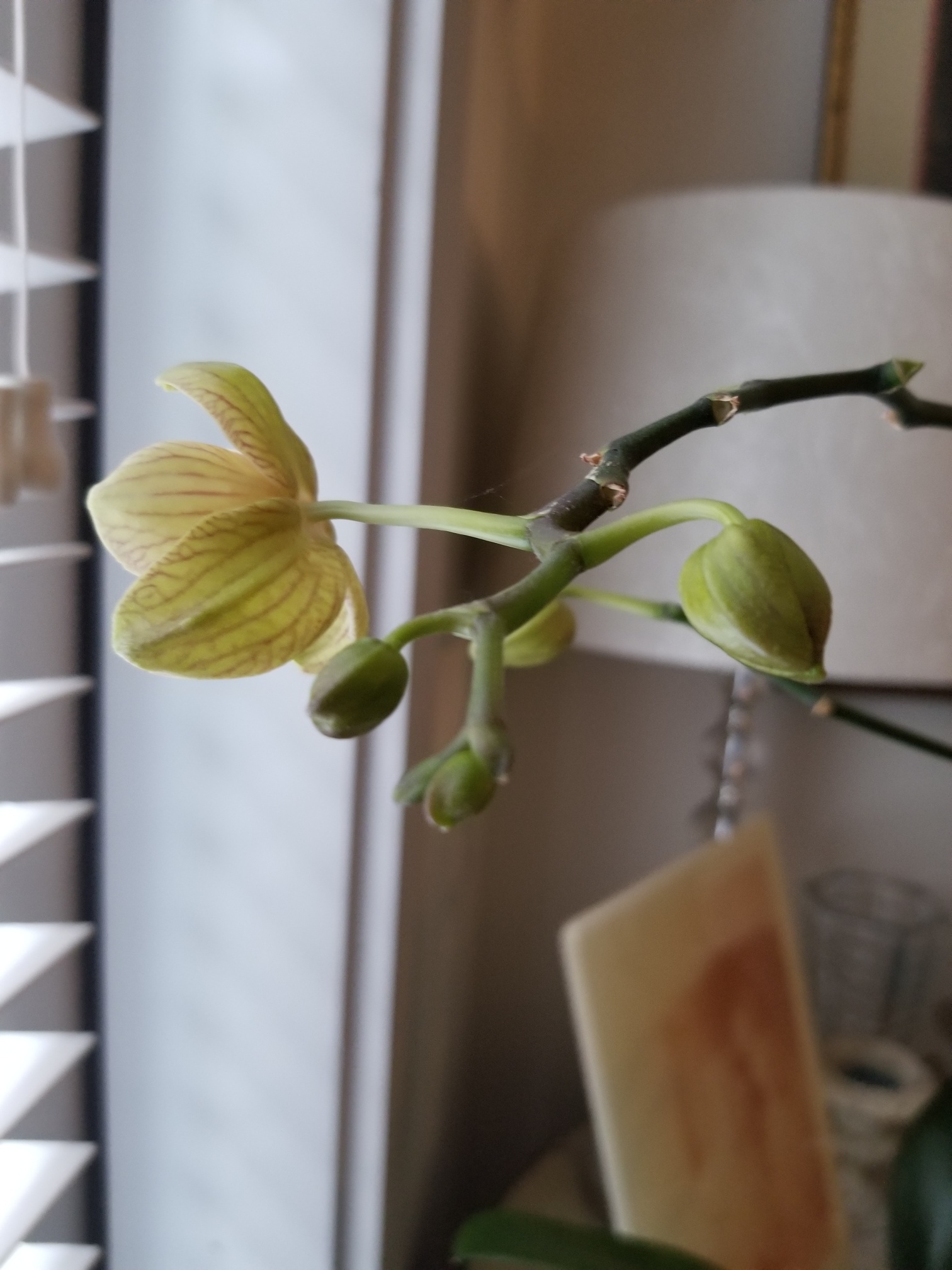
Today, I noticed a similar miracle in my own living room. The delicate orchid plant a friend gave me for my birthday about six months ago had lost all its blooms. Since the leaves remained green,  I continued to water it as my late Aunt Virginia, the orchid whisperer, had instructed. She used a turkey baster to gently inject two squeezes per week. Carefully infusing every Saturday, I have been watching the tiny green pouches with anticipation, and to my surprise, one opened this morning—a fragile, tiny orchid saying, “Hello world.” 

Like Martha when she lifted the carefully arranged cotton pouches from her refrigerator, tears welled. There is something magical and comforting about witnessing life  . . . its brazen persistence, the continuity of creation, the divine order of things. I must allow this to sink in, to feel it down to my marrow. Another day . . . another glimpse of grace.

Poetry in Progress

This has been a poignant and moving week—punctuated by the power of words and the vulnerability of relief. Tears have welled spontaneously and frequently. And synchronicity has worked in mysterious ways. Last weekend, I participated in a profound and revelatory writing workshop with poetry priestess Meghan Adler. Astonishing, informative, and inspiring.

I am exceedingly grateful for every moment spent in the company of this sacred circle. Here are a couple of poems:

NOTICING ELLIOT

I notice the always ache
I notice the awful gravity of gone
I notice my breath beside a stream of sea-salt tears
I notice the volume of your absence
I notice the hallow of my emptiness
and accept it as peace.
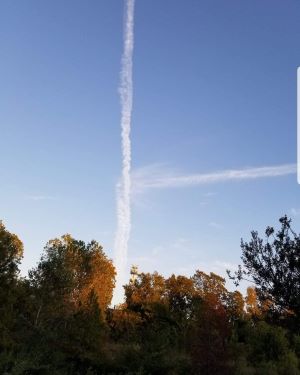
I notice the fading jet trail against the bright azure sky—
dangling like a cotton thread from heaven.
Then, I notice your brother’s laughter in the other room.
I notice what I notice—and I wonder. Are you there?

MO MEMORIES

They say Mo-Ranch is a thin place, where the edges blur between now and then.
I say Mo is a dream, a collection, really—had, made, and missed.
Mo is a gene attached to my DNA—crafted and careening without fear down a creaky wooden slide into the cool green ripples.
Mo is a memory, bittersweet and fragile, like a scoop of Blue Bell in July. Mo is a feeling. Forever and never again—still, inhabiting my heart.
Mo was saxophones, songs, and s’mores. Can this be all that family is?
But now, Mo is a time to remember and to grieve,
held in the river’s lap by day and wrapped in glitter’s blanket by night.
We say it’s not just a place at all.
It flows through all who know Mo—by grace.

The Thing with Feathers

Grief.

It comes in many forms, and its spikey talons dig into your flesh, heart, and soul with varying degrees of force, pressure, and duration.

But there is another layer now, a cacophony of angry, bellicose voices that surround, infiltrate, and pierce us relentlessly—pinging and careening like atomic particles in a supercollider of accelerating chaos. David Brooks said in The New York Times this week, “There are dark specters running through our nation—beasts with shaggy manes and feral teeth.”  The reality is that these events in America continue to weigh on us like a mammoth psychic boulder.

And then, there’s the pandemic—manifesting universal grief, a primordial stew of sorrow,  but there is a rancid ingredient in the pot. In this brave new concoction, so many of us are stirring unresolved pain and anger into the mix, which is hindering our ability to care for each other and ourselves. We are stuck, hardened, and adversarial.

Indeed, this creates a challenging milieu for anyone who is grieving a personal loss. But grief is not a competitive sport, as they say. There are as many flavors of grief as there are types of relationships, but I must admit, losing my first-born 26-year-old son 29 months ago in a sudden and violent motorcycle accident tops my list.

And I know loss.

At this point in my life, I have lost everyone in my immediate family, except my precious 24-year-old son, Ian.

  • My marriage in 2000
  • My only cousin, Scott, at 56 in 2007 from alcoholism
  • My mother, Ann, in 2012 after two strokes and a 32-month debilitating illness
  • My father, Everett, in 2014 after shrouding a lifetime of illness and secrets
  • My only aunt, Virginia, in 2020 in isolation due to COVID
  • My only sister Melissa’s presence after Elliot’s death
  • My kitty of 14 years, Patches, in 2020
  • And my dear first-born son, Elliot, in 2018

These are my stages of grief. This is my confederacy of losses, and recently, their collective impact has been both untenable and inevitable, as I come face to face with my own mortality.

Looking back on these years of struggle, I now recognize why everything else in my life has been messy and difficult, exacerbated by that baseline of trauma and turmoil. So these days, I am learning to be gentler with myself. I’m learning to forgive. I remember being completely flummoxed by Elliot’s wisdom on the day of my father’s funeral in 2014.

He mused, “For such a small family, we certainly have expansive abysses to bridge.”

Poignantly astute. And ironically true.

It’s like living a double life sometimes—one where you have to act like everything is OK, fabulous, and sunny all the time—and one where you are constantly overwhelmed and looking for ways to fill yourself with worthiness, love, and peace. The good things always seem to evaporate—so temporal and insubstantial, like the ribbon of smoke from my mother’s cigarette.

I don’t have the answer—far from it, but writing helps me see . . .  helps me understand the truth of what I think and what I feel. Writing also has helped me recognize that finding glimpses of grace, even the faintest glimmers in the middle of the ickiest muck, is not only surprising—it’s necessary. It’s what I need to live, the way I can put one foot in front of the other and keep going. Especially now.  

I also am strengthened by savoring the moments of awe, surprise, and connection more intentionally. Grief is like walking around in quicksand, a strange kind of suspended animation or slow motion that suffocates and separates you from the rest of the world—a bittersweet state that compels you to take a beat, whether it’s in misery or in magic.

And the magic is definitely in the angels, those celestial messengers who just seem to show up—out of thin air. How grateful I am for them, tears welling . . . I’m not sure where I would be without these cherished friends in my life. They appear when I need them most, and they are present in ways I never could have imagined. The mysterious grace of those who just know—they see me, acknowledge my profound pain—and stay anyway. They keep me going. I am writing this because of them. I dedicate this to them.

I only hope I can give other shattered, grieving hearts the same salve, the same presence . . . and in the words of Emily Dickinson, the thing with feathers. That is my meaning. That is my hope. That is my purpose.

Time for Haikus

Last night, I caught the very last story on “60 Minutes.” It highlighted the rare and timeless rituals of Kabuki, still thriving in Japan today. Though this took me back to my days studying theatre at Northwestern, I was reminded of the Japanese word for Kabuki. It means “off-kilter.” Apropos of everything.

Instantly, I also felt Elliot’s presence in the stylized whimsy of this ancient theatrical spectacle. What bittersweet synchronicity that I happened to turn on the television at this very moment on the last dreary Sunday evening of 2020. And since then, I have felt El’s unmistakable zeitgeist all around.

Japanophile was just one of his many monikers—son, brother, nephew, grandson, friend, housemate, boyfriend, wordsmith, poet, alumnus, brilliant iconoclast, IT savant, musician, saxophonist, shakuhachi flutist, composer, music critic, artist, philosopher, pinball wizard, raconteur, Global Payments engineer, volunteer, mission tripper, teacher, journalist, book devourer, bitcoin purveyor, witty conversationalist, “whitish-hat” hacker, tilde.towner, fellow traveler, cool cat, hip nerd, aviation ace, computer game whizz, old soul, restless heart, disarming intellect, insatiable student, reluctant soccer goalie, skeptical theologian, Japanese car aficionado, Japanese motorcycle fanatic, skateboarder, origami master, loose tea connoisseur, and world citizen.

Oh, I know I’ve left out something . . . so much to so many in one wild and precious life.

“That’s OK,” my wise and spiritual friend Sue reassures me, her heart also irreparably torn apart by the loss of her adult son, “As mothers, we cannot ever possibly know the totality of our sons’ existence, the edges of the lives they led,” she muses. “And somehow, that’s strangely healing. They have and always will exist far beyond us.”

Yes, I think that notion is powerful. I take a breath.

And perhaps, it’s grace.

Right now, it’s Elliot’s Japanese thread that dances before me, so it’s no surprise to me that 2020 was my “year of the haiku.” They seemed to flow from me like a gentle mountain stream. I dedicate them now to Mr. Elliot. They greeted me as I walked, as I sat quietly in my office, and often, as I washed my hands—over and over . . .

With these words, I hold you—and all who have struggled and lost so much in this year like no other, as will I for El forever:

Heart
Make it stop—this now
sacred, unquenchable ache,
because you took flight.

Time
In a susurrus,
what is done, always will be—
dissolving the now.

Apart
Life in a bubble—
Hermetic under its veil.
Together alone.

Grave
No other reason.
A grave erratum must be—
Buried on his page.

Lament
Grief’s ambient tears,
Permeating my membranes
inside tomorrow.

Swann
Passed is my future
So now In Search of Lost Time
Still—breaking my heart.

The Only Thing I Had Time to Write

The holidays are tough; they just are, this year in particular. Even in years without global pandemics and the strife of 2020, they serve up a bittersweet concoction of complicated family dynamics, mixed with tidbits of joy, the overwhelming presence of loss—and deeply cherished memories of celebrations past. This is my third Christmas without my son Elliot.

For me, the holidays are something to endure, to get through. But for my dear son Ian’s sake, my priority is to create new traditions for us, fresh memories for him, for me and for us. Easier said than done this year, but being together will be my greatest gift.   

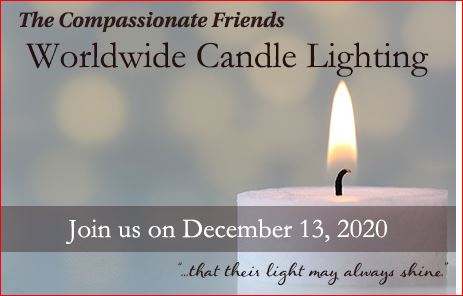
There are plenty of new experiences now. Last weekend, I participated in a deeply moving ritual – the 24th Annual Worldwide Candle Lighting, sponsored by Compassionate Friends, virtual this year. The event honors and remembers children gone too soon. My dear friends Patty and Ken, along with First Unitarian Church, hosted a beautiful Zoom ceremony with profound and intimate meaning for those who struggle every day to pick up the sharp fragments of their shattered hearts.

Whether two days or 20 years, the pain never goes away. It just changes, but still inextricably intertwined with every moment and every breath. What a sacred time this was for those who understand, who know without saying a word, to honor the names and memories of our precious children, sorely missed but never, ever forgotten.

In thinking about how I would honor my extraordinary Elliot, on this day I thought of his poetry. He spoke from the depth of his soul, and I felt compelled to share his inimitable words that continue to resonate and inspire me in my writing each day. I recall with gratitude when Elliot’s University of Toronto poetry professor contacted me via this very blog. Thank you, Ricardo Sternberg, for sharing your admiration for Elliot and his exquisite words, a welcome glimpse of eternity. I read this as his candle burned:

THE ONLY THING I HAD TIME TO WRITE

By Elliot Wright

This cut in my bone
is the cut in yours,
a home for bad infinity;
Cantor’s blade is teething there,
mythic sword in stump.

Time, kindling for consciousness,
julienned, burns like straw,
and pallid smoke smears memory
as sheets of stratus smear the sun.

The clock unspools a fibril
a slender invisible line
for stringing my images along
like a Chinese line of cash–

It’s hard to tell–they’re shaved so thin–
which image here is
derived from the last.

It’s hard to adequately express my gratitude for the First Unitarian community—thoughtful, caring, authentic, and present. Thank you, thank you. Sending love and light to all who suffer in this unbearable darkness. I am with you. My heart is with you.

Signs of Life

I found a dime on the garage floor beside my car door today.

My heart lurched as I said out loud—oh, a dime.  It’s Elliot. It’s a sign. Then, I smiled when I remembered that Elliot had named my 2007 SUV Doris.

A couple of months ago, a friend told me she began seeing dimes after her husband passed following a brief illness, and they gave her some peace. Then, I started seeing posts and mentions about the prevalence of this common coin greeting from those we have lost. The belief is that when you find a dime, it is an indication that someone on the other side—ancestor, spirit, guide, or deceased loved one is looking out for you. Also, in numerology, the number 10 connotes a circle, so a dime could be a sign of fulfillment, unity, or coming full circle. Interesting.

I am always looking for signs—bring ’em on. I pay attention to the birds on the creek behind my complex, the patterns the jet trails make in the sky, and every Miata within 100 feet, which seem to be driven uniformly by Mr. E’s doppelganger. I’m always looking. Always noticing. When I make a connection or think I do, there’s a sort of serotonin hit. A kind of spark.

In truth, being intentionally present and absorbing these gentle winks is my new favorite pastime, though they are often as painful as they are comforting. Nothing else really seems to matter as much anymore—as I navigate this gnarly path of unbearable loss. I am realizing more than ever—especially under the weight of the deepening pandemic, that all we have is this very moment. Right now. That’s it. And this dime, of course.

I still cannot believe my Elliot left this earth so suddenly and senselessly 28 months ago tomorrow—a lifetime and an instant. The tragic details of his shocking single-vehicle motorcycle accident remain unclear. So, as I train my psychic radar to maximize reception, I’m looking for any flash of insight regarding what actually happened on that worst of all days—or maybe just a glimpse of the enigmatic Elliot I miss so much.

Some days, the signs appear to pop like corn kernels in the pan, but on others, there is radio silence. Laura Lynne Jackson, one of my favorite grief gurus and spiritual mediums, says in her book “Signs: The Secret Language of the Universe” that we can even ask our people for specific signs, but alas, Elliot can be quite the contrarian. He’d rather surprise and tickle me by orchestrating random retro saxophone riffs on NPR—or by returning an object that had been lost for 20 years.  

The latter happened just after Thanksgiving. Elliot’s dad, Max, had misplaced the baby scrapbook I carefully crafted to document his first few years, including a cover I handstitched from the same fabric I used to make the curtains, comforter, and bumper pads for his nursery. Somehow, Max had packed it in the moving maelstrom around our divorce. Our house sold in one day two decades ago, so the separation was a turbulent affair. I had been asking him for this treasure for more than twenty years—almost to the day.

When Max called to tell me out of the blue that he had uncovered it, I  was completely gobsmacked. A flood of bittersweet images tumbled across my mind’s eye as I sat stunned and overwhelmed in heart-stopping incredulity. The startling discovery was also a poignant reminder of time disrupted, of time missing.

But Elliot, my Elliot, was making an appearance for Thanksgiving—for both his mom and his dad. Max’s voice cracked with emotion as we finished the call.

“I’ll bring it by tomorrow,” he said quietly.

Though the brittle scrapbook was dusty and soiled, I was enormously grateful to finally receive this precious artifact that contained pages and memories as tattered as my heart. It was like finding an elusive piece of my brilliant son that I had been searching for.

What a sign, indeed, and a glorious glimmer of grace. I will keep looking. 

Changing Your Light

Changing Your Light

This has been a particularly exhausting week—juggling multiple layers of chaos and confusion at work, in our nation, and on my heart. But today, I received a profound gift. I spoke with dear woman named Cindy Hartner about her grief journey and our lifetime of almost-intersections. It’s amazing how many glimmers of healing and grace we can offer each other—if we just pay attention. Thank you, dear Uncle Duck, for orchestrating this sacred connection. I am looking forward to reading Cindy’s book, “You Don’t Get a Map, You Get a Compass.”

As we chatted about our experiences with overwhelming grief, she mentioned how she often makes unspoken deals with herself in her head, like “If I roll a particular number on the dice or draw a specific card, I will be OK.” Maybe it was synchronicity, but her revelation echoed some of my own recent musings . . .

I’ve done it all my life.

It’s one of those compulsive ruminations that’s stuck on auto play in my head, probably related to my need for control. I call it the “if/then game.” It goes like this: If the light stays green, and I make it through the intersection, then . . . fill in the blank. I’ll get the job I applied for, or that pain in my lower back will go away, or I’ll get sleep tonight. Or even bigger things, like Elliot, my late son, will walk through the door today and say, “Fooled you, didn’t I, Mom?” Or America will somehow awaken and heal from this algorithm-infected, dystopian nightmare. The result can be anything—large or small, but it rarely has anything to do with the “if” statement. A random association.

Some might call this magical thinking or even insanity, but still, I do it—even though I know it’s ridiculous fantasy. Maybe somewhere down deep, I hope it’s true in some woo-woo sphere of influence—that when I send a thought out into the time/space continuum, the atomic particles align in my favor, and all will be well.

“That’s silly!” my dismissive inner COO snaps.

True enough, I admit. This practice is not logical, but it aligns with my core belief in a cosmic causality we don’t quite understand—even if it’s just a desperate attempt to make sense of this quagmire of dysfunction we are drowning in. Yes, the universe is intricately intertwined in tangled threads of connection and coincidence that we do not fully comprehend, but I’m relatively certain Einstein’s interest would be minimal in this juxtaposition of events. Even if you dive into dark matter, string theory and parallel universes, you are not going to find much evidence to support the veracity of these syllogisms. I know this intellectually, but I so want to believe there is a greater meaning in all this chaos.

“And what about when that light turns red?” my inner COO chirps. “What happens then, huh?”

You stop the car; I smirk to myself.

“Ha, ha . . . Very funny. Seriously, if the light turns red, and let’s say Trump instantly concedes with humility and grace, anyway, is that the exception that proves the rule? Or maybe I just made a specious association? Hmm . . . ‘tis a conundrum.

“So,  how’s this workin’ for you?” asks that sassy COO.

Well, I’m not sure. I think I need to do a deep dive into the data. To date, it’s just an in-the-moment kind of deal—a mini-boost, a serotonin hit, similar to a “like” on my Facebook post. It’s like I’m tricking my brain into anticipating that something good might actually happen, somehow, some way, for some strange reason. So, is there any control?

Somewhere between predestination and free will, I think there’s gentle control. We find it in our own choices and in how we respond to people and events. That’s our only durable control. I guess everything else is a roll of the dice. Makes me think of the serenity prayer. It’s about knowing the difference between the things I can change and the things I can’t. There’s the rub, especially when one of those things is the eviscerating death of my beloved first-born adult son, Elliot. That’s where I struggle most and where I probably will always struggle. It’s also where my guilt, despair and fury at the universe often obscure my better angels. Indeed, knowing the difference is the hard part, but I think that is my real work in this life and ultimately, my real peace . . . but only if that light stays green.