The 3 Cs of Grief

The gravity of grief is exhausting. I am talking about the micro and the macro of it—the micro being the weight of my own personal confederacy of  losses, and the macro, the gestalt of the world in crisis—the pandemic, isolation, climate change, social injustice, QAnon, Texas’ incompetent leadership, gun violence, the pain of lost children at the U.S. border seeking sanctuary, and the list goes on. Lately, I feel like I have hit a wall, a saturation point that has tarnished all my silver linings.

Most days, I find this perpetual state like a heavy weighted blanket, paradoxically as agitating as it is confining. (That might be my CPTSD talking.) But let’s face it—if you are human, you are dealing with crappy stuff. It’s part of the package, and the last year, two or four, have been tough for all of us. Grief is ubiquitous. Grief is insistent. Grief is oppressive. Grief is obstinate. Grief is transformative. It changes who we are because it changes the way we rub against the world. And yet, it is also one of the most potent reminders of our inherent humanness. As so many smart people have posited, we grieve to the degree we love. So, for those of us who suffer most, grief is never going away, but it may morph. And the exact way it morphs is as individual as a snowflake.  

That’s why addressing and processing grief head-on is essential.  I feel like I have a PhD in the subject by now, but that’s why I talk about so much. It’s what I feel called to do. My meaning. David Kessler, a gentle grief guru, says so eloquently:

Grief must be witnessed. Something profound happens when others see and hear and acknowledge our grief. Mourning is the outward expression of our grief. Conversely, something goes wrong when it remains unseen.

Profound and true, because the vulnerability of being witnessed authentically is what  restores your sense of wholeness and safety—even if it’s just for a nanosecond. And with a continuous queue of compassionate witnesses, we begin to truly transform and reach a place where we can carry the weight of the  grief burden—and eventually, carry on. We feel carried by the whole, and we realize we need community to heal.

Truly, acknowledging and validating grief is the most gracious gift you can give a broken heart. It opens up a space to breathe and thereby connect. It is the definition of grace, and regardless of your faith proclivities, grace is the place where we encounter the divine. There are no magic words required. You don’t even have to apologize. You really don’t need to say you are sorry for my loss or anything like that. This might be a new catchphrase or hashtag. Grief means never having to say your sorry. Just say you are present, and you cannot begin to comprehend the gravity of my loss. “There are no words. I am here.” That’s it. I consider those who can sit in silence or simply walk alongside me to be my angels on earth.

Still, grief in our culture is tricky because it’s the elephant in room—which translates into instant awkwardness. We don’t have the language for loss. We have never developed the interpersonal grief muscle, but why? Loss is universal, and being seen is the most potent balm. It’s just the closeness, context, and confluence of the loss (or losses) than can tip the scales, adding even more weight. Perhaps these are the three Cs of grief?

Closeness. This is nature or depth of the relationship. Though grief is not a competitive sport, there is particularly devastating wallop losing a child packs. It’s out of order and  life altering—even setting all other aspects aside. No matter how complicated the connection might have been, losing a child is like losing an appendage. You can technically go on living, but you have to relearn how to do everything.  In losing my spectacular and sometimes frustrating Elliot, I find the love and pain often conflate (another C). That intensifies the ache that erupts in these startling moments when I am unable to breathe or stop the sobs. Indeed, context is also a vexing conundrum. (Another C or two.)

Context. This refers to the particulars of your life at the time of the death and after. These factors are inescapable. The context has felt like a tightening vice around my experience. Elliot had found his groove. He had just scratched the surface of his potential. Tragic on so many levels. I just can’t bear it, so I  just keep moving. I try to muster empathy for myself, but it’s a challenge. I am training myself to acknowledge the tough feelings and release them. I’m kind of an emotional nomad—living on the edge and trying not to dwell in the stagnate stew underneath for any length of time. I feel so detached and untethered. Thank God, I have my moments of precious connection with friends but nothing durable. Some days, maintaining the “I’m OK” exterior is so exhausting I just mentally vamp. Tread water. Barely. Put one foot in front of the other. That’s all I can do. Yet something about this bifurcation in the isolation of my silent, compact office in front of three computer screens makes it even more debilitating.          

Confluence.  The pieces of me, the factors that have come together in this life now—after Elliot. As a single mom of a 24-year-old son, I must constantly remind myself to give my Ian the space he needs to forge his own path. That’s both difficult and easy.  Beautiful and desolate. Fulfilling and draining. I feel I am performing over the center ring without a net, flying the airplane without a parachute—when all I really want is a safe place to land. Emphasis on “safe.”

I know I need to find a way to be in the world. Half of me feels like it no longer operates in sync with the rest of me—the definition of yin and yang. Numb, heavy, confused and anxious. Time is sluggish and accelerating—all at the same time. Perhaps it’s the lumbering repetitiveness of COVID existence—sorrow, grief and isolation make an unappetizing cocktail.  I have lost that unconscious optimistic autopilot that helped me know I would be OK; I would figure it out one day. But now, everything is hard, feels off center and precarious in this context of fear and uncertainty  It’s hard to flex the over-functioning muscle that’s always been my default coping mechanism. I guess my grief therapist would say that’s progress, but I say it’s harrowing. Definitely accounts got the vacuousness, the feeling of perpetual flimsiness. And the futility of this awful, new normal existence.

I am constantly aware of the vast, dank abyss I teeter over. Sounds dramatic, I know, but I am a half, maybe even a third of a person now. Am I missing the part that died with Elliot? Will my heart regenerate. Will my soul? I want the comfort and connection others can bring and simultaneously want to be with alone. I have no interest in banter, but it used to be my fuel, my raison d’etre. Still, I am grateful for so much—an extraordinary son, caring friends, my writing, a new job that challenges me, and a lovely roof over my head.

I am different now.

And maybe, there are more than 3 Cs—maybe five, six of seven. They all apply at one time or another, but the most important one is not a C at all. It’s a G—grace. Cherishing those transcendent moments that remind me I am part of something much bigger than my own rumination.

I must keep clearing the space to let in the light.

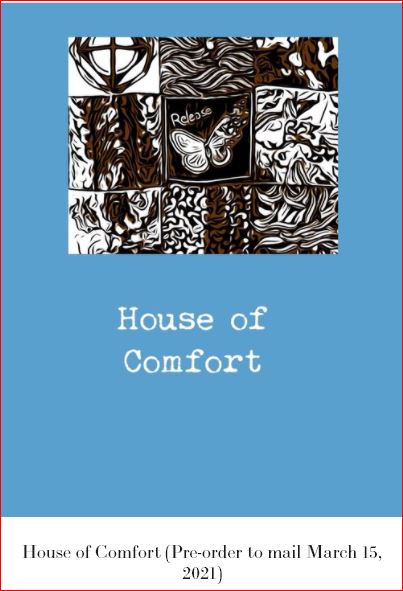
House of Comfort

I am honored to be included in this beautiful collection of art, poetry, and essays. “House of Comfort” is part of a series compiled by Gretchen Martens for The Retreat House Spirituality Center in Richardson, Texas. It’s a deeply moving journey—poignant yet powerful, intimate yet universal. Here is a taste:

The Gap

Off-kilter—
Everything feels out of whack,
out of sync—
Uncomfortable in my own skin.
Is there a place between the yin and the yang?
Where nothing and everything meet?
The push and the pull.
The yes and the no
Bitter and sweet
To and fro
Black and white
Pleasure and pain
Progress and regress
Abel and Kane
Now and forever
You and me
Off and on
Captive and free
Stuck there. I am
Like Scylla and Charybdis
the space in between
but filled with emptiness.
What should I do?
[My favorite FAQ.]
Nowhere feels right.
Says the voice in my head,
“Wherever you go, there you are,”
Who is it? Can’t shake it. So bizarre.
Since I lost so much.
Since I lost my baby boy,
Since I lost
My bearings. My heart. My joy.
The thread I hang by.
“Get over it. Buck up.”
[Programming reverb.
Doesn’t it suck?]
How I’ve tried to retool and rewire.
All the trauma and the pain.
Yet tears fall fast in the blink of my eye
“Isn’t it just such a shame?”
A wisp, faint susurrus—Elliot’s breath?
To feel. To embrace. No regret.
To listen. To wonder. To hold. To know.
But where? How? Where did he go?
And where is he now?
“I am here, mom,” he said.
But not really at all.
Mysterious. Dead.
As in life. So prickly
on the other side.
But it’s not right.
Out of joint.
Out of order.
Out of my mind.
I just can’t think.
So many questions.
Nary an answer caught in my sigh.
To how? To what if? And still to why?
Without parent nor child.
Both gone in between.
Mostly alone, half-mother unseen.
A daughter, a sister, a cousin,
a niece, a granddaughter—
not. Rest but no peace.
Together. Alone.
By myself.
There, I go the darkest place,
my miasma in tow.
“You’re fine. Buck up,” she says with a grin.
Not until I feel. [Who said that?]
“Oh, just take it on the chin.”
Those voices are real.
But what I did not expect—
I am here by grace—
to forgive, not forget.

Poetry in Progress

This has been a poignant and moving week—punctuated by the power of words and the vulnerability of relief. Tears have welled spontaneously and frequently. And synchronicity has worked in mysterious ways. Last weekend, I participated in a profound and revelatory writing workshop with poetry priestess Meghan Adler. Astonishing, informative, and inspiring.

I am exceedingly grateful for every moment spent in the company of this sacred circle. Here are a couple of poems:

NOTICING ELLIOT

I notice the always ache
I notice the awful gravity of gone
I notice my breath beside a stream of sea-salt tears
I notice the volume of your absence
I notice the hallow of my emptiness
and accept it as peace.
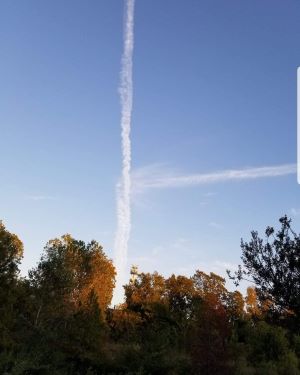
I notice the fading jet trail against the bright azure sky—
dangling like a cotton thread from heaven.
Then, I notice your brother’s laughter in the other room.
I notice what I notice—and I wonder. Are you there?

MO MEMORIES

They say Mo-Ranch is a thin place, where the edges blur between now and then.
I say Mo is a dream, a collection, really—had, made, and missed.
Mo is a gene attached to my DNA—crafted and careening without fear down a creaky wooden slide into the cool green ripples.
Mo is a memory, bittersweet and fragile, like a scoop of Blue Bell in July. Mo is a feeling. Forever and never again—still, inhabiting my heart.
Mo was saxophones, songs, and s’mores. Can this be all that family is?
But now, Mo is a time to remember and to grieve,
held in the river’s lap by day and wrapped in glitter’s blanket by night.
We say it’s not just a place at all.
It flows through all who know Mo—by grace.

Time for Haikus

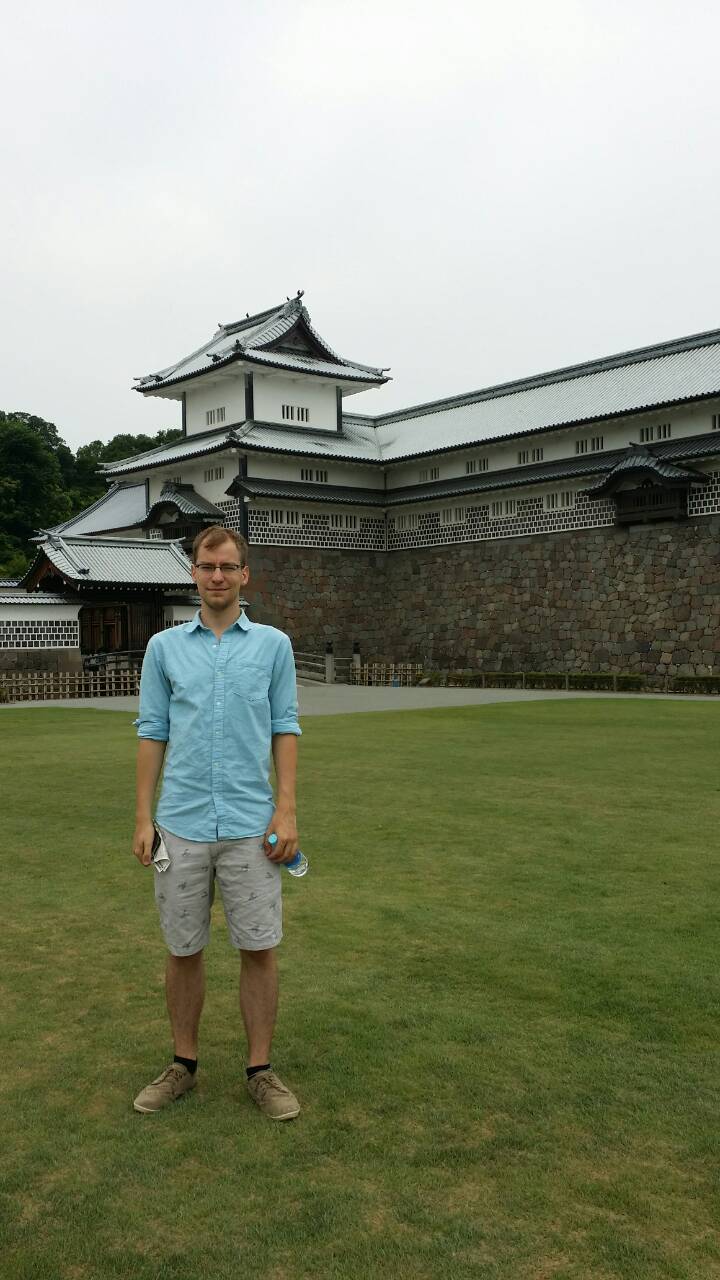
Last night, I caught the very last story on “60 Minutes.” It highlighted the rare and timeless rituals of Kabuki, still thriving in Japan today. Though this took me back to my days studying theatre at Northwestern, I was reminded of the Japanese word for Kabuki. It means “off-kilter.” Apropos of everything.

Instantly, I also felt Elliot’s presence in the stylized whimsy of this ancient theatrical spectacle. What bittersweet synchronicity that I happened to turn on the television at this very moment on the last dreary Sunday evening of 2020. And since then, I have felt El’s unmistakable zeitgeist all around.

Japanophile was just one of his many monikers—son, brother, nephew, grandson, friend, housemate, boyfriend, wordsmith, poet, alumnus, brilliant iconoclast, IT savant, musician, saxophonist, shakuhachi flutist, composer, music critic, artist, philosopher, pinball wizard, raconteur, Global Payments engineer, volunteer, mission tripper, teacher, journalist, book devourer, bitcoin purveyor, witty conversationalist, “whitish-hat” hacker, tilde.towner, fellow traveler, cool cat, hip nerd, aviation ace, computer game whizz, old soul, restless heart, disarming intellect, insatiable student, reluctant soccer goalie, skeptical theologian, Japanese car aficionado, Japanese motorcycle fanatic, skateboarder, origami master, loose tea connoisseur, and world citizen.

Oh, I know I’ve left out something . . . so much to so many in one wild and precious life.

“That’s OK,” my wise and spiritual friend Sue reassures me, her heart also irreparably torn apart by the loss of her adult son, “As mothers, we cannot ever possibly know the totality of our sons’ existence, the edges of the lives they led,” she muses. “And somehow, that’s strangely healing. They have and always will exist far beyond us.”

Yes, I think that notion is powerful. I take a breath.

And perhaps, it’s grace.

Right now, it’s Elliot’s Japanese thread that dances before me, so it’s no surprise to me that 2020 was my “year of the haiku.” They seemed to flow from me like a gentle mountain stream. I dedicate them now to Mr. Elliot. They greeted me as I walked, as I sat quietly in my office, and often, as I washed my hands—over and over . . .

With these words, I hold you—and all who have struggled and lost so much in this year like no other, as will I for El forever:

Heart
Make it stop—this now
sacred, unquenchable ache,
because you took flight.

Time
In a susurrus,
what is done, always will be—
dissolving the now.

Apart
Life in a bubble—
Hermetic under its veil.
Together alone.

Grave
No other reason.
A grave erratum must be—
Buried on his page.

Lament
Grief’s ambient tears,
Permeating my membranes
inside tomorrow.

Swann
Passed is my future
So now In Search of Lost Time
Still—breaking my heart.

The Only Thing I Had Time to Write

The holidays are tough; they just are, this year in particular. Even in years without global pandemics and the strife of 2020, they serve up a bittersweet concoction of complicated family dynamics, mixed with tidbits of joy, the overwhelming presence of loss—and deeply cherished memories of celebrations past. This is my third Christmas without my son Elliot.

For me, the holidays are something to endure, to get through. But for my dear son Ian’s sake, my priority is to create new traditions for us, fresh memories for him, for me and for us. Easier said than done this year, but being together will be my greatest gift.   

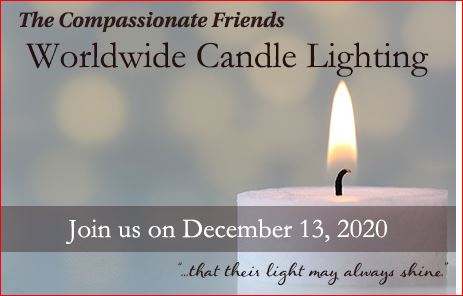
There are plenty of new experiences now. Last weekend, I participated in a deeply moving ritual – the 24th Annual Worldwide Candle Lighting, sponsored by Compassionate Friends, virtual this year. The event honors and remembers children gone too soon. My dear friends Patty and Ken, along with First Unitarian Church, hosted a beautiful Zoom ceremony with profound and intimate meaning for those who struggle every day to pick up the sharp fragments of their shattered hearts.

Whether two days or 20 years, the pain never goes away. It just changes, but still inextricably intertwined with every moment and every breath. What a sacred time this was for those who understand, who know without saying a word, to honor the names and memories of our precious children, sorely missed but never, ever forgotten.

In thinking about how I would honor my extraordinary Elliot, on this day I thought of his poetry. He spoke from the depth of his soul, and I felt compelled to share his inimitable words that continue to resonate and inspire me in my writing each day. I recall with gratitude when Elliot’s University of Toronto poetry professor contacted me via this very blog. Thank you, Ricardo Sternberg, for sharing your admiration for Elliot and his exquisite words, a welcome glimpse of eternity. I read this as his candle burned:

THE ONLY THING I HAD TIME TO WRITE

By Elliot Wright

This cut in my bone
is the cut in yours,
a home for bad infinity;
Cantor’s blade is teething there,
mythic sword in stump.

Time, kindling for consciousness,
julienned, burns like straw,
and pallid smoke smears memory
as sheets of stratus smear the sun.

The clock unspools a fibril
a slender invisible line
for stringing my images along
like a Chinese line of cash–

It’s hard to tell–they’re shaved so thin–
which image here is
derived from the last.

It’s hard to adequately express my gratitude for the First Unitarian community—thoughtful, caring, authentic, and present. Thank you, thank you. Sending love and light to all who suffer in this unbearable darkness. I am with you. My heart is with you.

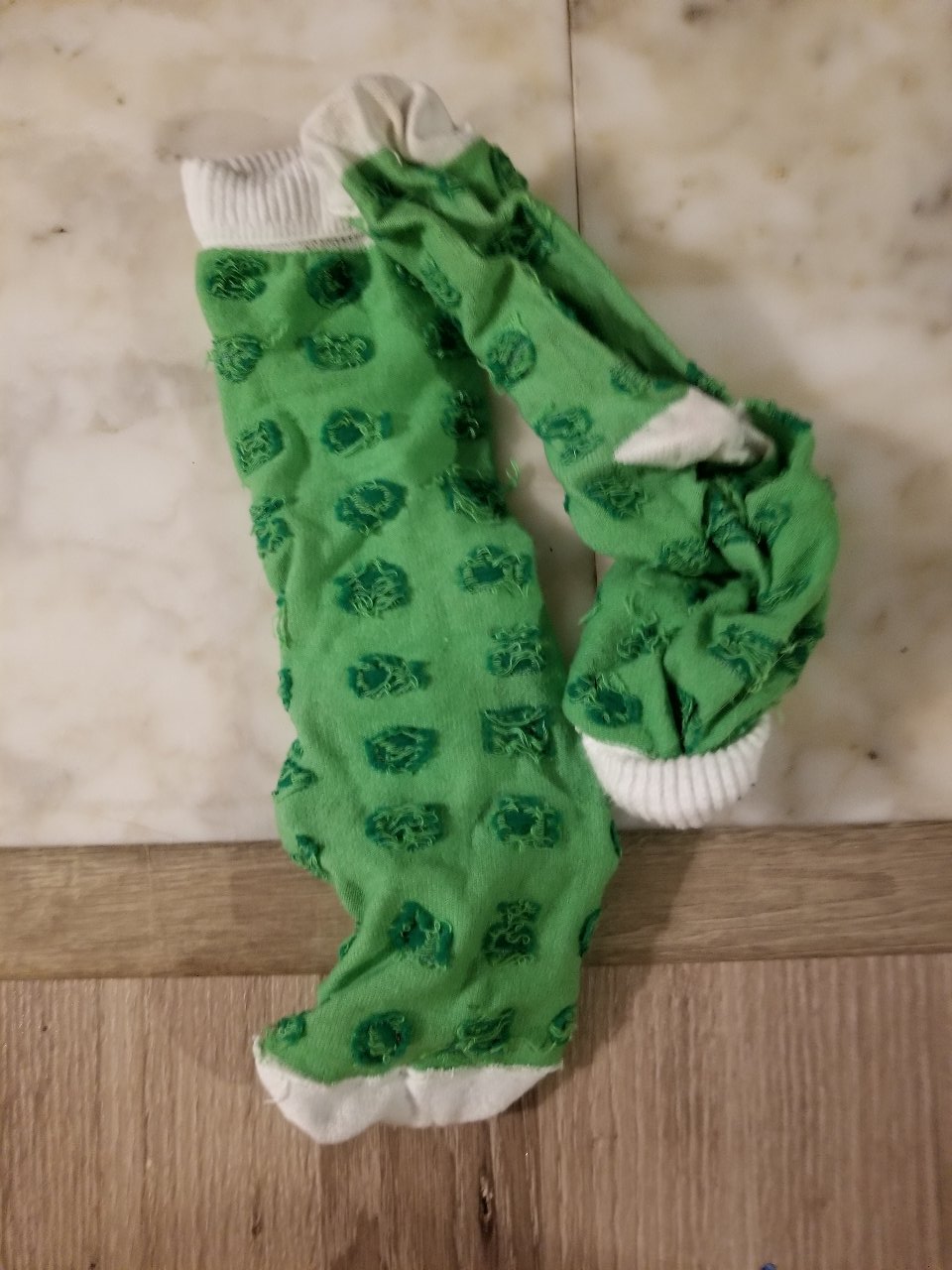
The Green Socks

Elliot was wearing green and white socks on August 5, 2018, the day he somehow flew off his motorcycle over the side of an elevated entrance ramp—and into the arms of the angels. I could hardly bring myself to pull them out of the left black-leather boot sitting still on the floor at my feet next to the glass coffee table. Unsoiled, they were wadded up together in a haphazard ball. I imagined some harried ER nurse or technician removing them hastily before pushing the gurney holding my son’s fatally bludgeoned body down the stark white corridor to the operating room.

I was not there yet.

I found the socks after I mustered the strength to open the stuffed white plastic drawstring bag I received from the hospital with the words “E. Wright – Maj. Trauma, 08.05.18,” marked in black Sharpie on the side. They were turned inside out, but I could tell they were covered with tiny shamrocks and other little icons. I gasped but could not swallow for a moment as my eyes welled with tears like a filling bathtub. I could barely see. The smallest details always seem to have the biggest impact. What perverse and horrifying luck they wrought. I lifted the bunch of bright green fabric to my nose to catch one last whiff of his life. There was a faint, earthy odor that I immediately recognized in all its bittersweetness. 

Oh, how Elliot loved socks—an avid collector of the most eclectic colors, patterns and prints. I smiled. They hailed from Tokyo, Toronto, Lubbock, New York City and Amazon—the quirkier, the better. For his last with me Christmas, I bought Bombas for him and for his brother, Ian—thick, warm and cushy with a mission. One purchase, one donated. The Tom’s Shoes of socks. But Elliot seemed to have foot struggles all his short life. Just a couple of weeks before his death, he mentioned needing to see a podiatrist for the third or fourth time to extract tiny shards of glass he had accidentally stepped on in the middle of the night after he dropped a wine glass on his loft’s concrete floor. And how I remember several visits to the orthopedist when he was a teenager to have his painfully ingrown toenails surgically excised.

“Cut straight across,” I would recommend—but he always followed the curve.

Being a single boy-mom is not for the faint of heart.

Yet these green socks seemed to have a life of their own. A couple of days after Elliot left the earth forever, George, a Northwestern pal, thespian, and medium/psychiatrist living in Pittsburgh, Pennsylvania, messaged me on Facebook with fierce urgency. It was surprising. We had not spoken in more than 30 years. Not even a “like.”

 “Elliot wants me to connect with you now,” he said. “He’s coming through with lots to say,” George insisted. I was flustered but responded.

“He says he’s OK.  He wants you to know he’s OK. And there’s something about green socks or lime-green shoes. Something green . . .”

There is no way George would have known this detail. Though I had posted the grim news about my loss on social media, I never made any reference to clothing—nor the socks of any color. I hadn’t found them yet. He had never met Elliot. I felt a shudder down to my marrow. It was startling and oddly comforting at the same time, but I was still in a general state of shock.

“It wasn’t karma. It wasn’t fate,” George typed in the messenger box. “That means it’s mechanical failure, user error, encounter with a vehicle or something like that. Elliot is saying, ‘Something went wrong.’”

I devoured every word.

The relentless pursuit of the details of Elliot’s demise consumes me. I am restless, distracted, and anxious most of the time. I have no way to make sense of it. I know that horrible things happen all the time. And yet, we live in a culture that runs on blame. We don’t have the tools to accept or process the unfathomable or the messy. So, I am caught, stuck, mired in this inextricable, mind-numbing place. Like trying to straighten out a Mobius strip or untangle a knot caught in the finest gold chain, I keep turning, twisting, and tugging, but the resolution is futile.

 I hear my late  mother’s voice in my head.

“Elaine, your best talent is your ability to untangle things. You can unravel anything,” I remember my mother saying as she took a puff from her extra-long Max cigarette. And she was right. Fixing things, figuring things out . . . or at least, trying is what I do—my modus operandi, probably since childhood. However, this clearly defies all my best solutioning skills.

When I was a girl, I learned to pull at every link of a tightly tangled necklace with the help of a fine silk needle and a magnifying glass, ultimately identifying the one strand or link that would loosen the angry snarl and let the wadded chain fall free. Oh, how I wish I had that needle now, but there is no such thing in my universe’s haystack. I must embrace the ambiguity. I wonder if I will ever know how to be in the world. The obsessive thoughts torture me day and night, awake and asleep, a haunting refrain I can’t seem to get out of my head.

Was there another driver on the ramp who caused him to swerve? Maybe going the wrong way? Was he cut off? Did one of the 911 callers who refused to provide their contact information see something or do something? Is someone covering up? Was he caught up in a manic episode? A migraine fog? Was it an accident? Did he misjudge the tight turn? Endless torture.

The minimally damaged bike was found still running, sitting peacefully on the ramp with the kickstand down. I saw it on the dash-camera video footage I requested from the city. How could this be? There are too many questions. In the Texas Health Resources records I requested,  the EMTs reported that “a motorcyclist was cut off and forced off the road on LBJ ramp.” Everything contradicts, and nothing makes sense.

“He was going too fast and lost control. That’s it, mom,” the DPD traffic officer said with a smug smirk, “It’s not the first time, and it certainly won’t be the last.”  

Don’t call me mom, I thought as I tempered my tearful response. The sanctimonious officers conducted no investigation. I was livid and still am. I cannot stand that my baby’s fate was summarily dismissed. It’s a forever knot buried in the depths of my heart, a heavy layer of everyday grief I must learn to carry. How I wish I could just let it go, let it be, and be at peace. Everyone says it takes time. If only I could find just the right thread to pull—or sign to see.

Like the green socks.  


Changing Your Light

Changing Your Light

This has been a particularly exhausting week—juggling multiple layers of chaos and confusion at work, in our nation, and on my heart. But today, I received a profound gift. I spoke with dear woman named Cindy Hartner about her grief journey and our lifetime of almost-intersections. It’s amazing how many glimmers of healing and grace we can offer each other—if we just pay attention. Thank you, dear Uncle Duck, for orchestrating this sacred connection. I am looking forward to reading Cindy’s book, “You Don’t Get a Map, You Get a Compass.”

As we chatted about our experiences with overwhelming grief, she mentioned how she often makes unspoken deals with herself in her head, like “If I roll a particular number on the dice or draw a specific card, I will be OK.” Maybe it was synchronicity, but her revelation echoed some of my own recent musings . . .

I’ve done it all my life.

It’s one of those compulsive ruminations that’s stuck on auto play in my head, probably related to my need for control. I call it the “if/then game.” It goes like this: If the light stays green, and I make it through the intersection, then . . . fill in the blank. I’ll get the job I applied for, or that pain in my lower back will go away, or I’ll get sleep tonight. Or even bigger things, like Elliot, my late son, will walk through the door today and say, “Fooled you, didn’t I, Mom?” Or America will somehow awaken and heal from this algorithm-infected, dystopian nightmare. The result can be anything—large or small, but it rarely has anything to do with the “if” statement. A random association.

Some might call this magical thinking or even insanity, but still, I do it—even though I know it’s ridiculous fantasy. Maybe somewhere down deep, I hope it’s true in some woo-woo sphere of influence—that when I send a thought out into the time/space continuum, the atomic particles align in my favor, and all will be well.

“That’s silly!” my dismissive inner COO snaps.

True enough, I admit. This practice is not logical, but it aligns with my core belief in a cosmic causality we don’t quite understand—even if it’s just a desperate attempt to make sense of this quagmire of dysfunction we are drowning in. Yes, the universe is intricately intertwined in tangled threads of connection and coincidence that we do not fully comprehend, but I’m relatively certain Einstein’s interest would be minimal in this juxtaposition of events. Even if you dive into dark matter, string theory and parallel universes, you are not going to find much evidence to support the veracity of these syllogisms. I know this intellectually, but I so want to believe there is a greater meaning in all this chaos.

“And what about when that light turns red?” my inner COO chirps. “What happens then, huh?”

You stop the car; I smirk to myself.

“Ha, ha . . . Very funny. Seriously, if the light turns red, and let’s say Trump instantly concedes with humility and grace, anyway, is that the exception that proves the rule? Or maybe I just made a specious association? Hmm . . . ‘tis a conundrum.

“So,  how’s this workin’ for you?” asks that sassy COO.

Well, I’m not sure. I think I need to do a deep dive into the data. To date, it’s just an in-the-moment kind of deal—a mini-boost, a serotonin hit, similar to a “like” on my Facebook post. It’s like I’m tricking my brain into anticipating that something good might actually happen, somehow, some way, for some strange reason. So, is there any control?

Somewhere between predestination and free will, I think there’s gentle control. We find it in our own choices and in how we respond to people and events. That’s our only durable control. I guess everything else is a roll of the dice. Makes me think of the serenity prayer. It’s about knowing the difference between the things I can change and the things I can’t. There’s the rub, especially when one of those things is the eviscerating death of my beloved first-born adult son, Elliot. That’s where I struggle most and where I probably will always struggle. It’s also where my guilt, despair and fury at the universe often obscure my better angels. Indeed, knowing the difference is the hard part, but I think that is my real work in this life and ultimately, my real peace . . . but only if that light stays green.

Thanksgiving Looms

Still, I cannot escape the presence of his absence.

As Thanksgiving approaches for the third time since my precious 26-year-old son Elliot left this earth but not my heart, the pain is just as debilitating. Yet it has changed. Now, it’s more of a dull, unrelenting throb or ache—strangely different from the blinding sharpness that took my breath away in those earliest days. This also will be the Thanksgiving that marks the passing of an entire generation in my family with the death of my 96-year-old aunt Virginia in April. And I mourn the passing of Patches, my spirit cat of 15 years, as well.

I am reminded of the revelatory words of a new therapist I have been seeing. She is almost supernatural in her ability to discern the enormity and uniquity of my grief, all its cracks and crevasses. That is its own balm in Gilead. Though she wears one of those plexiglass face shields that makes her look like a part-time astronaut and sits six feet away from me and my crimson damask mask, there is something profoundly healing about the unseen energetic connection between two people that transcends the Brady Bunch squares of a Zoom session. I’ll call her Jackie, and I am exceedingly grateful I found her.

She sees me, the me I am right now in this moment—in all my complicated dysfunction, still struggling to figure out who I am from one moment to the next. And Jackie can definitely identify with the morphing messiness of grief, as she lost her beloved husband about two years ago.

“I think you may have discovered a thin ribbon of space in carrying this heaviness,“ she observes. ”Think of it like the thin layer of air just above the floor’s surface in fire. If you can just find that sliver of oxygen in the room, you can breathe, even if for only a moment.”

I let the profound truth of this statement sink into every pore, cell and membrane. It feels poignantly true, but also elusive and temporal, kind of like my brilliant Elliot was in life. The idea is that this space . . . where the grace happens will eventually expand.

Hmmm, a glimmer of hope, I whisper to myself.

Since that horrible day in August 2018, my life has changed irreparably. But it’s more than that. I have changed—my core being has changed. That might be the most surprising thing about grief. I am not the same person. My soul is different, marred by an opaque, murky stain that no tonic will ever remove. Even my emotional anxieties, which were front and center but healing before he died, have changed. They are much more demanding.

My relationship with everything and everyone has shifted, off kilter and flailing. I’m a Calder mobile that has lost one of its perfectly calibrated arms. I am upside down and inside out. At least, I can say his name without tearing up now. The mornings are the worst, though.  I wake up every morning thinking I am stuck in some sort of lingering nightmare. 

I also find my patience for trivialities and random histrionics is non-existent. Life is simply too short to put up with such foolishness, but at the same time, everything triggers my fear. I am anxious about walking out the front door or speaking to a neighbor who is not wearing a mask. The world has become mostly an antagonistic place—in here and out there, exacerbated by the social, political and health realities that weigh on all of us. That said, I would gladly endure 100 2020s to reverse 2018.  

My ardent quest now, my only option as I see it, is to find some sort of meaning—not in Elliot’s death but in my life. As I have painfully discovered in the last few months, the more I search for answers to the whys of Elliot’s accident, the more dead ends I encounter. No satisfaction. No relief. Just more angst, more questions and more agony.

So, purpose is my focus, and I feel called in my heart to pursue this through sharing my story, through exposing my beaten heart, raw and damaged as it is, as I strive to pick up the jagged pieces I can bear to touch to help me go on—to honor Elliot’s memory and empower his precious brother, Ian.

Until then, I will walk this dark path looking for the glimmers of light and grace—such as a lone egret landing on a fragile tree branch protruding through the creek’s serene loden-green surface like a needle puncturing smooth Asian silk. I will look for the reminders that we are part of a greater whole and the grand mosaic of creation.

There, will be a glimpse of gratitude.

Love in the Time of Corona

“The opposite of faith is not doubt, but certainty,” said Anne Lamott, one of my favorite writers. “Certainty is missing the point entirely. Faith includes noticing the mess, the emptiness and discomfort, and letting it be there until some light returns.” I feel this speaks to our journey in the world today — as well as my journey through the dark persistence of grief. Today, I am grateful for even the most minuscule flecks of glitter.

Trying to make sense of this messy miasma, “love in the time of Corona,” as I’ve termed it, I had an epiphany. I realized I have been living in isolation for months — quarantining myself emotionally, spiritually and physically in a dank and dreary cave called grief. For the past year and a half, I have been hibernating, encased in a dimly lit reality not of my choosing. In fact, it’s a confederacy of losses that looms in every moment — my amazing son Elliot, both my parents, my treasured mentor, an exhausting 8-year relationship, several battles for justice, and the list goes on. Sinking under the weight of it all, I finally landed in the inertia pit.

Since Aug. 5, 2018, when Elliot left the earth so suddenly and violently,  my intersections with humanity have been infrequent, and alas, when I have engaged, it has required every ounce of energy I could muster. Still. Sad. Stymied. And yet, as much as I have resisted them, I am certain that these occasional human connections have kept me alive. A heartfelt ping from a sweet greeting card or a Facebook message from a faraway friend have rescued me from the deepest abysses of numbness. I have subsisted in a dystopian environment for months. I rearranged my life to work from home by taking a job with a company based in Atlanta. As the firm implodes into its own maelstrom of bankruptcy and confusion, my interactions there have been limited, as well. However, though I am practiced at this kind of separation, I am profoundly unsettled.

The dire predictions and mounting closures feel like a pall of doom folding into the gaps of our lives, slowly and steadily suffocating us. It’s not fear of catching the disease that troubles me most. It’s the fear of our fraying social fabric. In recent days, I have become keenly aware that my brittle inner being is now mirrored by the precariousness of the world surrounding me. There is certain terror in that. There is nowhere to go, nowhere to feel safe. Life, all of it, is so very fragile. Perhaps, that’s the essential lesson. Stability is an illusion, as much as it is manipulated, orchestrated, packaged and spun. Who can you trust? Why weren’t we better prepared? Who knew what and when? Was there biohazard release from a research lab in Wuhan? Was it on purpose or an accident? With fake news, Trump’s arrogant incompetence, the Russian agenda, data mining, Big Pharma, The Family, Fox News, CNN, and even MSNBC, where do we turn for truth?

Likewise, as I grapple with my internal grief, every effort to find answers to the questions around Elliot’s death and life delivers parallel rabbit holes and partial veracity. Why did Amazon Web Services (AWS) delete every trace of his business account when their customer service people strung me along for five months assuring me that the appropriate legal documentation would grant me access as his heir? Infuriating. Why is the Human Resources Department at Global Payments, Elliot’s employer, still giving me the administrative runaround about accessing his 401K? Why did the only witnesses to Elliot’s accident refuse to provide their contact information — and the police did not investigate? Why did the Texas Attorney General deny my private investigator’s request for photos of cars driving on that deadly ramp where Elliot lost his precious life?

Is it time to stop asking why?

Maybe.

I am just so damn tired, and it’s hard to imagine how I will ever process and internalize all of this — ever. Mostly, I feel alone. My reclusive son, Ian, Elliot’s younger brother, is here with me, but he is not truly present —  perpetually cloistered, as well, in his room and virtual computer universe. I wish I could be his rock, but I feel more like his handful of sand. My grief seems to well up in the void of isolation. It feels different now — so ubiquitous and inescapable. Social distance and virtual interaction — they have become de rigeur.

For the next couple of weeks, I have decided to just be —  no expectations, no questions. I will cherish the surprising moments, the shiny flickers of glitter dancing in the sunlight, when and if they come — paying a visit to an elderly neighbor; lingering for an hour on the phone with a friend I have not spoken with since Elliot’s death; losing myself in a particularly delightful episode of Schitt’s Creek; “Zooming” with my soul sisters, or taking in the healing wisdom of my cherished online writing group. Though these moments feel somehow incongruous within the rest of life, they are the treasures.

The times are overwhelming. There is no exit. Nothing is certain, and I struggle daily with the fundamental concepts of faith. So, I must try to make peace with uncertainty and notice every glimmer of the light . . . that’s returning.

That’s all we can do.


Everything Happens for a Reason?


People say it all the time. Everything happens for a reason.

It’s supposed to be comforting and deep. It implies there is some sort of grand scheme – a kind of cosmic chessboard where all the moves, winners and losers have been predetermined in some grand design. We just don’t understand or see the big picture. Whether you believe in God, Source, or a big, black hole of nothingness, this concept is difficult to digest.

And, these days, I have little patience for vague platitudes.

A year and a half ago, my precious first-born son, Elliot Everett Wright, died in a tragic, single-vehicle motorcycle accident. He was ejected off his shiny new Honda bike over the side of an elevated highway ramp, soaring 40 feet into the azure Texas sky. Elliot died on the operating table at the same Dallas hospital where he took his first breath at 5:17 p.m. on May 17, 1992. He told me he took every precaution – the fanciest Japanese helmet, safety-paneled jacket and thick, heavy boots. Except, there was always that inherent risk of riding the damn bike – a paradox that’s so difficult to rationalize.

My anguish deepens with each passing day.

What complicates my journey is the weight of accumulated losses and traumas over the past few years – my father’s death in 2014, after years of a rare form of epilepsy he kept secret, dissension regarding his care and eventual dementia; the death of my mother in 2012, after a debilitating two-year post-stroke struggle; the death of my cherished mentor and friend of 30 years last year; the intentional absence of my sister and only sibling after Elliot’s death, and the pain of a prolonged toxic relationship that I finally ended. I am a divorced mother of two brilliantly complicated boys, Elliot and Ian, and this worst-of-all-losses has throttled me.

So, when I recently saw Bill Maher opining about the cloying cliche – “everything happens for a reason” on his often-irreverent HBO show, something clicked. Granted, Bill Maher and a spiritual a-ha hardly seem compatible, but that’s why it caught my attention. He was interviewing Neil deGrasse Tyson, a crisp, witty scientific raconteur and author I enjoy watching ponder the mysteries of the universe.

Fresh from an uncharacteristic social media firestorm, he acknowledged contritely that he commented impulsively in response to one of our latest horrifying mass shooting incidents. He tweeted something glib about people dying in other ways every day. Perhaps, that faux pas did happen for a reason – to wake us up from our desensitized trance and complacent stupor around the senseless loss of human life in the name of gun ownership.

As they chatted about politics, truth and the universe, Bill declared, “One thing I hear all the time is that ‘everything happens for a reason.’ Now, that’s an absurd statement.” He went on to say it’s perpetuated by the entitled elite who revel in giving supernatural meaning to the happy accidents in their privileged lives. He observed that for those who struggle in abject poverty and pain, things don’t happen for a reason. They just happen, and they are mostly about struggle. It’s easier to recognize mystical signs of abundance when you have already reached the pinnacle of Maslow’s Hierarchy of Needs. Neil echoed his chagrin adding, “’Everything happens for a reason’ – is so not true. Everything is random in the universe. We create the reasons.”

Yes, I found this refreshing. A cosmic scientist was confirming what I now know down to the marrow. Horrible, unfathomable, devastating things happen. They just do. The unthinkable can occur, and it does – with swashbuckling arrogance. It’s a grim, raw reality that has drastically changed the way I view the world, life – and death. Jaded, maybe, but real.

Mindfulness practice teaches us that healing starts with the radical acceptance of what is. Thus, accepting randomness is part of that, right? And, it offers me a whisper of peace. Nothing makes sense, really. We all mourn losses, including the raging wildfires in Australia, an airplane shot down by Iran, and the random destruction wrought by ten violent tornadoes just blocks from my home in Dallas.

There is no reason.

That might be the most spiritual notion of all. These things simply are. They are part of being human. Yet, something about the death of a truly remarkable child and all his promise seismically shifts your psychic interface with life itself. When I hear “everything happens for a reason” now, it’s excruciating and hurts with the intensity of a frigid, subzero slap in the face. In fact, I feel like an alien in my own life when I encounter a well-meaning co-worker or neighbor reprise this “for-a-reason” banality or the ever-popular, “Heaven got another angel.” That does not help.

Though we strive to accept the tragedy and randomness of things, it’s still painful. There is no instant emotional anesthetic in the accepting. I guess that’s what Neil recognized on some level when he openly acknowledged that his insensitive comment made a negative emotional impact. He said:

Yes, it was true, but emotions do matter . . . People are bereaved. Facts are facts, but emotions are real, too. I should have taken some time before I typed that tweet. I should have taken a breath . . .

And, there it is – a perfect example of retrospective mindfulness. Self-aware and empathetic reflection. Here’s the lesson – let’s be more present with each other, more intentionally compassionate. And, more present in our grief. Yes, it’s awkward and uncomfortable, but that’s where the treasure is. In the end, that might be the only possible reason – for anything. The grace of vulnerability.

Maybe, things don’t happen for a reason, but, maybe, grace does.

Amid grief’s messy miasma, those tiny fragments of presence are what save us. Grace is in them – in the startling moment of compassion or the gentle word from another broken heart who carries the weight of a similar loss. Grace is in the unexpected care package that arrives from a sorority sister I have not seen in 30 years. It’s in the chance introduction to an angel boss whose compassion and wisdom make it possible for me to function at all. And, grace is in the generous soul of a dear friend I have known since first grade who makes a special trip across the country to sit with me on the first anniversary of Elliot’s death.

Grace. It’s those poignant, profound gestures and occasional synchronicities – often obscured by the heavy darkness that’s my new normal. I think this is all that matters in the end. I have to believe in the benevolence of universe – and God at work somehow. That’s the only way I can put one foot in from of the other . . . one day, one moment at a time – perchance to experience that next fleeting glimpse of grace.

Until tomorrow – and then, again.