Self-Actualization 101: Unravelling “The Four Agreements”

Humans hardly know what they want, how they want it, or when they want it.” 
― don Miguel Ruiz

I admit it. I am a personal development nerd. Perhaps, it’s because I am still searching for the best version of myself and my life ― as well as a way to heal from the experiences that have (gratefully) led me to this moment in time. But, with each new nuance of enlightenment comes another level of responsibility.

Lately, I have been thinking about the “The Four Agreements.” If you have not read don Miguel Ruiz’s multi-layered, yet elegantly simple work of modern philosophy, I urge you to grab your copy immediately. It’s more than “a great deal” on Amazon Prime Day. It will utterly transform the way you see your life ― and live it. This platform gives you a fresher, healthier way to engage in relationships, activities and even difficult encounters. It’s another installment in my continuing #InsideJob series.

The real challenge is practicing them in a disciplined away ― basting your brain in profound yet practical consciousness until it becomes second nature.  Perhaps, that’s why all Four Agreements are so appealing. In a way, they are a practical guide to peace. I am just going to take each one, summarize it and then, briefly provide an action item. Pretty sensible, right? Try them out, and let me know what happens. (We’ll start with the first two in this post.)

Agreement 1: Be impeccable with your word. 

Speak with integrity. Say only what you mean. Avoid using your word to speak against yourself or to gossip about others. Use the power of your word in the direction of truth and love.

I think this means consciously aligning your words with your truth and heart. Your words are your power to create ― and they are an extension of your divine energy.  Choose them carefully, because they can manifest your reality before you know it. They can also deplete, diminish, discount and sabotage. So, be mindful in every moment ― “one mindfully in the moment,” as we say in Dialectical Behavioral Therapy (DBT). Yet, this is easier said than done ― especially when you consider Dr. Joe Dispenza’s observation in “Breaking the Habit of Being Yourself”:

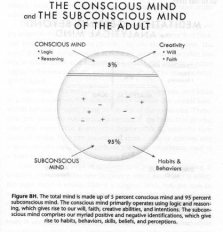
Even when we engage our conscious minds, they comprise only about 5% of who we are. The     other 95% is a composition of our subconscious minds ― our habits and behaviors that have been deeply programmed on our mental hard drives throughout our lives.

In other words, it takes work. We may all need to spend some quality time in #BrainBootcamp, but the glorious payoff is the confidence to take full responsibility for your actions. Release any element of judgment or blame by speaking from this authentic place of kindness, love and truth. Wow, wouldn’t that make a difference in our divided world?

ACTION ITEM: Pay attention to the actual words you use today ― and those other people say to you. They are potent messengers. For instance, what is your default when you respond to a compliment? What words do you say? Do you express a desire by planting yourself firmly and saying, “I need . . .”  How does that feel?  How comfortable do you feel asking a question in a meeting or open forum? Become aware of your own inner dialogue (or that pesky inner  critic) ― how you speak to yourself. I know I find myself saying things like, “Goofball, why did you do that?”  That’s not helpful. Rewiring, Will Robinson! Write them down, and then consider how you can turn them around to produce a more positive result.
Agreement 2: Don’t take anything personally. 

This one is the game changer for me, but then, as an over-functioner from way back, I tend to be far too focused on what other people are doing, saying or thinking.  It’s all about understanding how to set healthy boundaries.  But, here’s the deal ― nothing other people do is because of you. Period. What someone says and does is simply a projection of his or her own reality. Ruiz says, “All people live in their own dream, in their own mind.” It’s not your version of the world. What’s worse, taking things personally makes you ripe for abuse and pain. When you are impervious to the opinions and actions of others, you take back your power, escape needless suffering and find peace on your own terms. Love that.

ACTION ITEM: Make a list of people who seem to “push your buttons.” Notice where you end and where the other person begins in any given conversation. You do not need to take another person’s bad behavior personally. You may notice an emotional impact, but you are free to choose whether to continue engaging or not. Knowing it is not about you is incredibly freeing.

The trauma other folks express goes far deeper than the current interaction with you. However, even though the behavior is not about you, your reaction to it may have something to teach you about you. What is it triggering? What wounds are you activating in you subconsciously? Ruiz says, “You are never responsible for the actions of others; you are only responsible for you.”  What a productive way to contextualize difficult folks in your life.

The first two are magic. Love them so much.  Next post will look at the other two. Can’t wait! Stay tuned. 

Healing Trumps Trauma

“Nothing ever goes away until it teaches us what we need to know.” ― Pema Chodron

Appalled. I guess that word describes my current state. I keep trying to come to terms with the abhorrent behavior of our 45th president. Though I work daily to find a place of personal peace, the fear still creeps in. I know all is in “Divine Order,” but I am struggling to discern what kind of order that might be.  What could be the silver lining here? What is the gift in this, as great spiritual teachers might ask?

Well, I have a theory, and I guess I’ll go with it, because it’s really the only way I can contextualize the escalating chaos. I had a light-bulb moment when I saw Jeffrey Lord, a conservative pundit on CNN, attempting to defend 45’s alarming “Morning Joe” Twitter rant. Lord resolutely proclaimed, “You can’t call the president crazy.” Wow!  I had to put down my phone. That one sentence summed it up.

  1. Why can’t you?

There’s something distressingly potent in Lord’s protest. Why can’t you question a disturbing, unhealthy pattern of behavior that could endanger the lives of others ― in the leader of the free world? Lord’s claim shines a light on a pervasive mentality that strengthens the stigma of mental illness in the U.S.  Admittedly, this is not easy terrain to navigate, but mental illness is not a weakness. It is not an insult or a bad choice. It’s a disease ― a disease of the brain.  If you have a stroke, like President Eisenhower suffered in 1957, someone hopefully says, “Hey, something is not right with you. Are you OK? Let’s get some medical attention.” But with mental health issues, it’s much murkier. There is so much shame and embarrassment involved; we don’t speak up. We don’t get involved. The condition may not be as immediately life-threatening as a stroke, but it can certainly result in tragic consequences ― especially if you are president of the United States.

  1. “Crazy” perpetuates stigma.

On another level, I was shocked Lord said “crazy.” It seems to be the media catchall for all aberrant or irrational behavior, and its derogatory connotation helps propagate stigma and patient isolation, too. We are so uncomfortable talking about diseases of the brain that our default is “crazy” or now ― “cra-cra.” This language leaves no room for dignity, recovery or healing. And the shame prevents many from pursuing treatment (if their insurance will even cover it, that is) ― whether they are diagnosed or silently contemplating suicide. In a world where “the overall suicide rate rose by 24 percent from 1999 to 2014, according to the National Center for Health Statistics . . . and the suicide rate for middle-aged women, ages 45 to 64, jumped by 63 percent over the same period,”  we cannot continue to humiliate or ignore those who exhibit signs of mental illness.

  1. An inside job.

And finally, there is the reality to face that if we elected a man suffering from mental illness, he is our mirror. It is time to take responsibility for healing our own inner wounds. It’s time to choose authenticity, conscious communication, mindfulness and healthy boundaries.   

But Trump’s coterie of codependent enablers (flying monkeys) is not helping matters. White House spokeswoman Sarah Huckabee Sanders defended Trump’s tweets, saying he “fights fire with fire.” And Homeland Security Advisor Thomas Bossert minimized the threat of violence associated with the president’s hostile CNN-assault tweet ― actually saying he was “proud of the president” for creating a social media platform that connects with the people.

The 25th amendment offers some guidelines, but the act of defining “unable to discharge the powers and duties of his office” instantly becomes political and complicated in the realm of behavior.  In addition, the psychiatric profession is still hamstrung by the 1973 Goldwater Rule ― enacted after Sen. Barry Goldwater, the GOP nominee in the 1964 election, was declared psychologically unfit for the presidency by psychiatrists surveyed in Fact magazine.  Goldwater won a defamation suit against Fact, and the resulting rule still prevents psychiatrists from voicing a caveat publicly without conducting an examination. Unfortunately, this further perpetuates stigma, as well― muffling open discussion of mental illness concerns under a cloak of disgrace.  There is probably a middle ground we can explore somehow.

So perhaps, from a quantum perspective, Trump is here to open our eyes (that have been “wide shut”). Maybe it’s time to end the silence, as the National Alliance on Mental Illness  (NAMI) is trying to do in our schools nationwide ― freeing our voices to tackle taboos that keep mental illness under the radar and under-treated. We are only as sick as our secrets, as they say, and questioning the mental health of the president in a constructive, supportive way might help lift the veil.

I am not sure of the answer, but at least we can start asking the questions about the very real behavioral concerns of this unconsciously virulent and externally triggered man leading our nation. It’s about his health ― and ours.

_____________
From NAMI: If there is NOT AN IMMEDIATE THREAT OF DANGER but someone is acting irrationally due to his/her mental state, contact your local mobile crisis team. In the Dallas area, individuals may contact ADAPT Mobile Crisis at 1 (866) 260-8000.  If someone is acting irrationally due to their mental state and there IS AN IMMEDIATE THREAT OF DANGER to themselves or someone else, call 911. 

Cultivating Your Native Garden

“Let us cultivate our garden.”
― VoltaireCandide

I attended a provocative and refreshingly relevant production of “Native Gardens” by Karen Zacarias on Sunday at WaterTower Theatre in Addison, Texas. It was a modern take on the classic drawing-room comedy ― with a backyard twist. “Native Gardens” is a tightly orchestrated play about escalating conflict between two suburban couples who consider themselves “good neighbors.” However, their well-intentioned façades crumble when they begin to excavate the prickly, gnarly roots of ageism, racism, sexism and elitism ― all revealed in an emotionally charged explosion of their largely unconscious prejudices.

Zacarias and director David Lozano deftly capture the awkward challenges associated with communicating authentically and mindfully in an increasingly complex world.  The crisp, pointed banter shines a bright light on the cultural and racial tensions people have such difficulty discussing. Ostensibly polite conversations turn instantly into arguments ― and hilarity, though uncomfortable, ensues.

The drama builds over a festering boundary violation (love the irony there).  Tania, a young, pregnant New Mexico native pursuing her doctorate, attempts to “settle things” with Virginia, her stately new neighbor, who is an old-school Anglo feminist. Succumbing to her swelling rage as the plot thickens, Tania erupts, “You pushed all my buttons!” How accurate is that? But the truth is ― our buttons can only be pushed if we allow it.

And, that’s the message here. This high-def snapshot of suburban America reminded me of the conflict brewing in my own neighborhood association ― so often disintegrating into defensiveness and obstinate silence (without the guffaws).

The notion of “cultivating your garden” does apply here on several levels ― in this case, your native garden. In fact, way back in the olden days when I applied to college, I used that Voltaire quote, “Let us cultivate our garden” as a springboard for my essay. I can’t remember what I wrote back then in the last century ― painstakingly typing my cogent prose on a powder-blue Smith-Corona with Liquid Paper by my side. But I feel certain I was looking outside myself for the answers.

Now, I think the real garden to tend is inside.  It’s the one we discover in those moments of solitude in the peace and quiet. And, it’s up to us to clear out all the weeds, roots and debris cluttering our inner landscapes, strangling our opportunities to bloom ― as individuals and communities. 

So, take moment to listen to that still, soft inner voice ― the voice of compassion and kindness. It’s there. Mindfulness takes practice, but it’s the road to oneness and peace. Ask yourself, “Why am I feeling triggered?” “What is this about?” And the next time you go looking for the answer “out there” somewhere, you might try looking no further than your own backyard.

Finding Peace in Community: When Your HOA is an SOS

“All politics is local.”  ―Tip O’Neill

I attended the monthly meeting of my Home Owners Association (HOA) this week. As I entered the room on the humid summer evening, the atmosphere was heavy with expectation and simmering with skepticism.

You see, we are in the midst of launching an extensive and costly community-wide renovation project addressing years of deferred maintenance. But the project we are all funding is more than six months behind schedule. It has not even begun. Now, the board and residents are at loggerheads ― embroiled in a major kerfuffle over the financing and management of our seriously delayed initiative. With tensions festering, tempers flaring, and barbs flying, I felt very uncomfortable in the middle of this murky morass.

About 15 neighbors and I were attending the “working board meeting” to inquire about project status and related decisions impacting our finances and homes. But some of the board members were not amused. They responded to our questions with escalating hostility and defensiveness. One fellow resident even left in tears.  Such drama. The whole event was profoundly disturbing.

Days later, I am still feeling unsettled ― but I recognize this small community meeting in Lake Highlands, Texas  was truly a microcosm of our nation’s broader, brooding dysfunction. I do not understand this behavior, this lack of tolerance. When some folks encounter differences of opinion, they tend to lose all ability to relate as mature adults. In this unconscious breakdown mode, listening, respect and compassion cease. Polarization sets in.

Why is this happening? Why do opposing opinions make us all enemies? It reminds me what happened in the 2016 election as we hunkered down in our separate psychic silos. But, here’s the rub ― don’t we all want to live in happy, healthy, pleasant environments? So, what is getting in the way? Why are thoughtful, honest questions interpreted as personal attacks ― lambasted and dismissed? Evan McKenzie, University of Illinois political science professor and author of the book Beyond Privatopia: Rethinking Residential Private Government, explains that a complicating aspect of HOA disputes is that they often become personalized, “so you can’t even resolve them.”

One thought is this. The road to resolution is an inside job. It requires that we all commit to building authentic, aware relationships with ourselves, first. What I witnessed Monday evening ― and afterward, in harassing texts from a participant who took issue with my right to ask questions, was unconscious reactivity. And it spilled out all over the patio after we were dismissed as the “closed session” continued. There is no changing other people. Ever. But we can shift our own realities.

So, there is hope. There is mindfulness.

Essentially, I’m talking about the discipline of staying present, awake and aware in the moment. A great Forbes article states:

When you are mindful . . . you become keenly aware of yourself and your surroundings, but you simply observe these things as they are. You are aware of your own thoughts and feelings, but you do not react to them in the way that you would if you were on ‘autopilot.’”

I love this definition, because it’s about aspiring to a higher level of consciousness. Yes, it takes practice, but it is a practice that improves mental health ― as well as relationships. This means building mastery over your emotions and impulses — allowing you to adjust your behaviors.

According to a 2014 study from Carnegie Mellon University, self-soothing skills, mediation, and relaxation techniques that are part of mindfulness training have been proven to decrease levels of the stress hormone cortisol, and meditating for just 25 minutes a day for three days in a row is an effective way to alleviate psychological stress. There is a great, new app I’m using to keep me on track with my meditation called Headspace. It’s been proven that meditation can actually enhance empathy, creativity and focus ― all core elements of a joyful, peaceful, centered existence.

SOS: Small Organization Stress

HOA board meetings can be tough rooms. Stress levels for the board members can be high, because the job is voluntary with very little appreciation involved. Resources and time are limited. The organizational structure is likely insufficient, and there is usually no official training for positions that carry significant responsibility. Boundary function is probably not optimal regarding task assignments, and these unexamined resentments can easily manifest as contentious and unsavory behavior. Not exactly a recipe for a good time!

An insightful Entrepreneur article reminds us of the importance of process ― not mistaking impulsive action for productivity. This is something I have been tackling in my own life for the past couple of years. It involves becoming aware of my own emotions, taking a breath and a beat ― and retraining my brain to intentionally consider the pros and cons possible options. It’s called “wise mind.” Start your day with a contemplative practice ― breathing, mediation, journaling, etc. Or, spend 15-20 minutes a day walking outside in nature. Gain perspective. Space. When you feel yourself reacting emotionally, take a moment ― and ask yourself what the reaction is about. Is it an unconscious response?

Make Mindfulness Matter

Mindfulness is the cornerstone of emotional intelligence — and a way to help you create a more fulfilling life. Here are a few tools to make that journey more manageable for leaders in organizations:
• Delegate
• Listen
• Empathize
• Resist making snap judgments
• Ask for guidance and opinions ― know that asking for help is not a sign of weakness
• Evaluate your operating structure and responsibilities
• Realize that you are completely biased ― love that one!
• Get clear about what you really want out of a relationship, transaction or activity
• Prioritize — you won’t get everything. Clarify for yourself what is most important
• Recognize that folks have other opinions, and they have nothing to do with you.

Above all, get real! And find a way to enjoy the process. Courageously assess your strengths and weaknesses, continuously. We are all spiritual beings having physical experiences, so let’s try to make the best of it.

Do you have suggestions or questions regarding nurturing healthy communities ― from the inside out? Please share.

A Story Works.

Story.StoryWorks _logo

It’s potent and personal prose. Tales of tribulation, trial and triumph.

Story composes and captivates us ―  engages and incites us.

Our stories help us communicate more effectively ― adding color, authenticity and heart to our transactions and texture to our lives.

But, what is your story?  

Are you telling . . . or showing?

Is it a report or an experience? Detached or intimate?

Intellectual or visceral?

It’s all in your mind.

The brain is a complex and intricate operating system that calculates, synthesizes and mystifies.  Though we may believe we are making logical, data-based decisions, neuroscientists are recognizing that emotions are truly the catalysts.  In fact, they drive most of our behavior.

Emotions bypass the maze of embedded neural patterns to generate the feelings that guide our actions, choices and behaviors.  In a sense, emotions are the biological lubricant for all our decisions.

Logic is the final step in the process ― delivering the conscious rationalization needed to justify an unconscious impulse.  That’s where mindfulness can play a key role.

Researchers confirm that more than 90% of our behavior is generated outside of consciousness. So, that means we act based on feelings of trust, confidence and connection ― while we actively seek the data necessary to support those feelings.

The challenge is to recognize this and leverage it ― with the power and purpose of story.

As your plot thickens, join me to learn more . . .

Go back

Your message has been sent

Warning
Warning
Warning
Warning

Warning.


Reeling from 2016? It’s in the numbers.

“Sometimes things fall apart so that better things can fall together.”  ― Marilyn Monroe

clock2016

The agony and angst of 2016 are palpable. A grueling and malignant election cycle, combined with pernicious social unrest ― and the loss of too many beloved cultural icons to count have left us dazed and devastated.  So many friends and colleagues are anxious to bid 2016 a swift farewell, but I have recently stumbled on a compelling contextualization.

It’s about the numbers. After all, we seem to be a society obsessed with metrics. We are constantly parsing, computing, digesting and analyzing the data. We warehouse it, mine it and dump it ― but what about the most ancient of calculations ― numerology? Whether you embrace the metaphysical realm or deal solely in the concrete, it’s difficult to completely discount the math.

That is, 2016 is a “nine year:” The end of a cycle.

How does this work? Well, numerology is the study of numbers and their harmonics. Like those who question astrology, auras and chakras, skeptics abound. But who has all the answers?  Plus, this feels more like the mirror than the smoke. Without going into the granular detail, the Pythagorean system of numerology considers the cosmic significance of numbers associated with names, birthdays and years. That makes 2016 a “nine year.”

Do the math:

2+0+1+6 = 9

2+0+1+7 = 1+0 = 1

Clearly, we are living the completion of a particularly volatile and significant nine-year cycle.  Next year, 2017 will be a “one year.” A “nine year” heralds significant change and brings to fruition what began in the previous nine-year cycle. It’s a time of shedding old skin and trying on new ways of thinking and existing.  Where were we in 2007, the end of the last nine-year cycle? Where were you in 2007? George W. Bush was president, and we were about to elect Barack Obama, the first African-American president in history in 2008 ― commencing a remarkable cycle fueled by the audacity of hope. But now, that cycle is ending ― as we enter another new era.

A “nine year” is a time of completion, resolution and forgiveness, says one numerology site.  You can even calculate your personal-year number for 2017. Mine is “five,” which also foretells change, new adventures, relationships and adventures. I’m ready.

The interesting impact of a “nine year” is it focuses on cleaning up unfinished business. And if we resist the closed doors or deny the new horizons, we will not see the new realities. Daunting stuff. So, the numbers tell us it’s time to learn from the past, radically accept it, and decide how we want to build the future in the next nine years. It is a time to jettison old thinking, pursuits, habits and relationships that no longer serve us. Another great quote:

“The only real battle in life is between hanging on and letting go.”  -Shannon l. Alder


That one has resonated with me deeply this year ― as I seem to have been entangled in perpetual tangos with many aspects of life. However, what I have discovered is change begins within ― in each individual heart and mind. As we end 2016, it’s time to reach your conclusions, and tie up your loose ends. Clean out your closets and make more room. This will help you step into the next nine years free of unresolved traumas and challenges that might hold you back.

Apparently, it’s natural for a “nine year” to be highly emotional.  It can even feel like it’s taking you backwards, but the purpose is to help you learn the lessons that keep you stuck. This is a necessary process to release old emotions that might be triggering you in the present ― impeding your progress. We may be evolving spiritually as a society in ways we cannot fully fathom right now. Sometimes, painful experiences are required to help us grow. Perhaps, it is no coincidence that some of our most beloved creative voices have left the earth this year ― at a time of such disruptive transition.  I think we are likely on the precipice of an unparalleled period of seismic spiritual realignment.

So, what will the “one year” hold?

Who knows? But 2017 is the number of beginning ― the dawning of something altogether new. The “one year” is time to act independently ― but also to lead by example, putting your unique talents to work for the greater good and the community as a whole.

The great news about 2017 is that transformation is an integral part of the equation. Be open and be ready. Fasten your seatbelts; it going to be a bumpy, high-velocity ride. Embrace positive expectancy.   Anything is possible ― with hope, faith, love ― and a clean slate.

The Art and the Science of Infinite Possibilities

“I look at you all, see the love there that’s sleeping . . .”

— George Harrison

guitarI was taking my morning walk in the crisp Texas air on Sunday and listening to the “random shuffle” on my smart phone. As indicated with crystal clarity here, there are no accidents ― a pattern to the randomness usually emerges. And George’s message in “My Guitar Gently Weeps” impacted me on a profound, new level. Admittedly, we all have our favorite Beatles’ songs, and this is definitely in my top five.

“I look at you all, see the love there that’s sleeping 
While my guitar gently weeps
I look at the floor and I see it need sweeping
Still my guitar gently weeps.”

In sync with this moment, I was attending a dazzling event over the weekend called #DreambuildersLIVE, and I thank Unity Church Dallas for offering special access to the experience.  This was the Mary Morrissey show, and she is certainly a magnetic maestro of meaning ― orchestrating mesmerizing messages in “a container” of multimedia magic.

One of her fundamental life-coaching principles is “notice what you are noticing.” This reinforces and supports my current journey ― as I find it requires vigilant practice. I think of it as “uber awareness” or “turbo mindfulness.”  And it’s essential, because our dreams all start in our own hearts and minds ― an inside job. Deftly unfolding this concept, Mary polished many glistening enlightenment nuggets in her approachable, warm style. “You can’t get TO your dream ― you must come FROM it,” says Mary. Letting that idea seep into every molecule is potemt as I envision and feel my future joy in the now ― the present moment. Be the change. Live the dream. (Need more practice.)

In this iconic song, George is definitely noticing what he is noticing. And though that darn floor is filthy and his guitar is gloomy, he chooses to see the “love there that’s sleeping.” I have read he wrote the song at his mother’s house in Warrington, England as he contemplated “I Ching, The Book of Changes.” It’s regarded one of the most important texts of Chinese wisdom and philosophy ever scribed, and it was a foundational source for Confucius and others.

I believe one of the notions George is referencing is the ethereal mystery of relationships and the interconnectedness of all things and beings in the universe.  Our oneness with all ― and one for all time. Just beginning to embrace these ideas based on ancient philosophies, twenty-first century science is now studying the hidden, untapped power of the brain and its relationship to the quantum field. In fact, “Make it MATTER” is another great Mary-ism ― linking meaning with quantum change and infinite possibilities.

Yes, Mary is vibrating at a higher frequency ― and creating a surge in the process. You could feel it in the room of more than 750 people from across the globe gathered here in Texas for a nexus of relationship and intention to generate something wonderful and good.  So refreshing as we notice . . . our “political floor may need some sweeping.” But . . .

“With every mistake we must surely be learning.”

Emotional Intelligence

JP_BrainIt seems so simple.

Our thoughts create our reality. Research tells us our brains are constantly changing, evolving and reconfiguring in response to our environments and every new nugget of data we encounter.  But, how many of us really pay attention to our thoughts ― every single notion swirling around in that molten miasma of emotions, desires and unconscious habits?  Well,  Dr. Joe Dispenza is answering that question, and he says we can actually rewire our brains to create whatever we want ― out of our own primordial stew.

Nerve cells that fire together wire together, “ Dispenza says.

So lately, I’ve been thinking about this perplexing cerebral frontier in the context of marketing. Dispenza confirms what I learned more than 20 years ago when I did some work for an innovative boutique market research firm called Addison Marketing Group.  It all starts with basic anatomy ― we have three brains:

  • Neocortex ― the newest, most evolved brain. It is walnut-shaped and governs conscious awareness, cognition, problem-solving, language and information gathering. It is the brain’s CEO.
  • Limbic Brain ― the emotional brain. The size of a lemon, it controls functions related to anger, happiness, fear, as well as memories ― and regulates internal chemical order.
  • Reptilian Brain or Cerebellum ― the oldest brain. It maintains habits and holds the seat of the subconscious mind.

Here’s the rub ― each one of these brains communicates using a very different language.  Understanding how they function can definitely inform our approaches to building effective marketing strategies ― not to mention enhance our mental health and happiness.

Though I was introduced to the concept of “Whole-Brain Marketing” many years ago, it’s resonated with me throughout my career ― and produced consistently powerful results. The idea is this:

  • Lead with a compelling message to trigger an emotion, such as a pain point . . . (Like: Is the Hassle of Finding Leads Wearing You Out?  (or) When her nightmare becomes her reality . . .
  • Follow with logical reasons to act/buy
  • Provide an easy, comfortable way to conduct the transaction

This sequence addresses the neocortex, the limbic brain and reptilian circuitry. The challenge is in identifying the appropriate subconscious messages ― and the execution, of course.

The alchemy of message creation and testing becomes even more complex when you consider Dispenza’s revelation that even when we do engage our conscious minds, they comprise only about 5% of who we are. The other 95% is a composition of our subconscious minds ― our habits and behaviors that have been deeply programmed on our mental hard drives throughout our lives. In fact, behavioral economist George Lowenstein confirms “our subconscious explains our consumer behavior better than our conscious. 90 percent of all purchasing decisions are not made consciously.”

If people aren’t aware of their own truth, shouldn’t we question the veracity of any traditional polling of market research? We are all making choices and decisions, but we really don’t know why. It’s sobering. Certainly, we are all driven by unconscious motivations to varying degrees ― unless we have done lots of therapy or meditative work.

That’s why mindfulness is so important. Mindfulness is the process of actively noticing new things — putting ourselves in the present moment and taking responsibility for our reactions.  This gives us room to respond. It’s the ancillary judgments we bring to the “party” or a situation that cause us pain, anxiety and suffering.

Practices such as meditation and quantum healing can begin to tap into the vast 95% ― so we can become clearer about who we are and what we want. Dispenza says that’s how we change our brains ― and the world. It’s how we start rewiring our minds to be at peace with ourselves ― and then, every relationship in our sphere becomes more peaceful, expansive and loving.

It’s an #insidejob.  Are your marketing mindfulness?

Thriving Trumps Narcissism

Art-Painting-American-Flag-Wallpaper-HD“Before directing the lightning in the sky, we must first harness the storms in our own hearts.”
—from Rasur by Roberto Brenes Mesen

As America’s fascination with Donald Trump continues to mystify me and many others across the globe, I believe I have a heightened sensitivity to his shenanigans and rhetoric, because I have struggled mightily to break free from toxic narcissists and unhealthy relationships. It’s a little like the smoker who has kicked a noxious 10-year habit. Daily, I am mindful about elevating my consciousness to recognize these insidious hooks — toning my exit muscle.

Narcissists are not intrinsically evil — as many contend, but they have developed hard-wired coping behaviors to compensate for their own deeply damaged psyches and false selves. On one level, my heart breaks for them and I do feel empathy ― even for those who have caused me such profound pain. Thankfully, I have learned that I am not responsible for their harsh judgments.  I am only responsible for my response to them.  There is absolutely no “fixing,” “repairing,” “convincing,” or “cajoling” these people.  They are who they are. That is it. The healing journey is stepping away from the tango.

Narcissists seduce, ingratiate, self-aggrandize, manipulate, denigrate and exploit, because they are desperate to neutralize their own shame ― and they have limited capacity to access their authentic inner selves.  Indeed, individuals with Narcissist Personality Disorder are perpetually looking for affirmation of an idealized, flamboyant, yet fragile, sense of self.

Et tu, Mr. President?

From a purely clinical perspective, the Diagnostic and Statistical Manual of Mental Disorders (DSM-5 criteria) Narcissistic Personality Disorder is signified by satisfying  5 of 9 of the following standards (American Psychiatric Association, 2013):

  • A grandiose logic of self-importance
  • A fixation with fantasies of infinite success, control, brilliance, beauty or idyllic love
  • A credence that he or she is extraordinary and exceptional and can only be understood by, or should connect with, other extraordinary or important people or institutions
  • A desire for unwarranted admiration
  • A sense of entitlement
  • Interpersonally oppressive behavior
  • No form of empathy
  • Resentment of others or a conviction that others are resentful of him or her
  • A display of egotistical and conceited behaviors or attitudes

Philosopher and teacher Deepak Chopra said this recently:

“But in reality Trump isn’t bizarre or anomalous. He stands for something universal, something right before our eyes. It’s an aspect of the human psyche that we feel embarrassed and ashamed of, which makes it our collective secret.  Going back a century in the field of depth psychology, the secret side of human nature acquired a special name: the shadow.”

The coping mask of the narcissist is an amalgam of arrogance, entitlement and pretentiousness. He or she often professes to know all the answers to all the questions ― while monopolizing all the conversations. A narcissist may become indignant at the drop of hat ― or belittle anyone in any role if he does not receive the service or treatment expected.  I witnessed this countless times in relationship with narcissists, but I always thought things would eventually get better somehow.

Finally, the reality kicked in. Having been the frequent recipient of this vitriol, I now know this comes from unresolved anger — often unconscious. A narcissistic reacts abruptly with rage or contempt to feel superior. And he can’t stand any perception of criticism. He may even abandon you ― anytime, anywhere. I know.

But, as narcissistic abuse recovery expert Melanie Tonia Evans insists, focusing on the NARC does not help or heal us. There is no cheese down that hole. Therefore, we can analyze Donald Trump all day long, but the more we try to inspect, explain and prescribe, the more deeply we become hooked. That’s the painful irony. It becomes an excruciating no-win scenario.

“It’s like trying to wrestle an ape,” says Evans. “Impossible.”  And the real reason we do it is because we are trying to soothe our own unhealed wounds by somehow fixing and placating the narcissist. We are assuaging our own concealed feelings of inadequacy, pain and unworthiness.  His grandiose promises attract us like the circus coming to town ― filling the darkness of our hearts momentarily with sparkles of light, some cotton candy and cheesy spectacle, but as when the circus leaves town, it also leaves us desolate, depleted and feeling a little sick.

He tells us just what we want to hear ― and then, he turns on a dime and crushes us to the mat. In Trump’s case, he calls someone “an idiot,” the world “a mess,” or mocks a disabled reporter. This pumps up his ego and self-esteem. It becomes a seductive, unending cycle ― until we decide the healing must happen inside ourselves. Evans calls this the “Thriver Model.”

That’s just what we must do as a nation.

We must face the deepest unresolved traumas of our early and recent history ― racism issues that have festered since the days of slavery, institutionalized inequality, fraying of the middle class, lethal police culture, gun violence, and the list goes on . . . we must heal them from within. Individually, we must feel better about ourselves; love ourselves and each other deeply and truly — so we are not prey to the brittle, smarmy, sanctimonious charlatans.

Trumping Survival Programs

Melanie Tonia Evans says the purpose of any relationship is to reflect back and trigger unhealed parts to help us evolve and grow ― individually and collectively. With a narcissist, this opportunity is amplified and intensified, because he or she eventually obliterates our fragile survival programs.  But in a sense, this is a gift, because we can take the wake-up call as an invitation to heal what is broken in ourselves. We have the power to become whole, productive suppliers of our own support, vitality and affirmation. We do not need to look externally for validation or worth.

When we deny, disown and mask the most vulnerable parts of ourselves to ourselves ― all the fears and pains, our abuse radar does not operate effectively. This leaves us out of alignment with our true selves ― and exceptionally needy. We are unconsciously replaying tapes from our families of origin, and in the case of the election, the early and recent years of our adolescent nation.  So, we need to get real.

We are not inextricably attached to this difficult person. We do not need to make this relationship work to survive. We do not need Trump to take us to some sort of vague “great place.”

It’s time to wake up, America! It’s an inside job.

Communicating Consciously. Living Contently.

IMG_20151012_102228As we wrap up another year and set our sights on the possibilities and opportunities of 2016, I’m taking stock. Once again, I find myself looking back on this online chronicle.  I love reviewing all those posts sorting out the early days of optimizing social media for nonprofits and small businesses, as well as the personal reflections and epiphanies that seemed to sustain me through the enormous challenges of past the six or seven years.


Today, this quote from Caroline Myss is resonating for me:

“Just let go.  Let go of how you thought your life should be, and embrace the life that is trying to work its way into your consciousness.”

This awareness is informing all of my choices, my writing, my work, my relationships ― and a new, intentional acceptance of me.  What is my core content? Who am I, really? And what am I all about in the world? These may seem like lofty questions for a mid-century mom, but the wheels are turning! And this I know ― the answers to such questions must come from my own heart, truth and spirit― and not some external source or futile effort to remedy the tornadic trauma of an emotionally toxic relationship. They need to be authentic, peaceful, and healing for me and my boys―even as they pursue their own lives.

As Sherry Turkle says in her book, Alone Together, “We are all too busy communicating to really connect.” And this week’s startling statistics on teen media usage make this observation even more salient. “On any given day, teens in the United States spend about nine hours using media for their enjoyment,” says the report from Common Sense Media.  Seems to me that media is becoming more than a mode of communication. It is now a way of being.

That means we must actively, deliberately train our brains to be mindful in each and every moment ― in every relationship interaction.

For me, these are the questions: Am I conscious? Am I present? What am I feeling right now? Am I making a decision that is healthy and self-nurturing?

Life coach Martha Beck says, “Little miracles begin happening to you whenever you turn toward your right life – even if it’s in the middle of the muck and mire. Small miracles turn into big ones.”

We just need to pay attention.

So, are you communicating consciously?